
Recreational Land for Sale with Owner Financing
What Is Recreational Land?
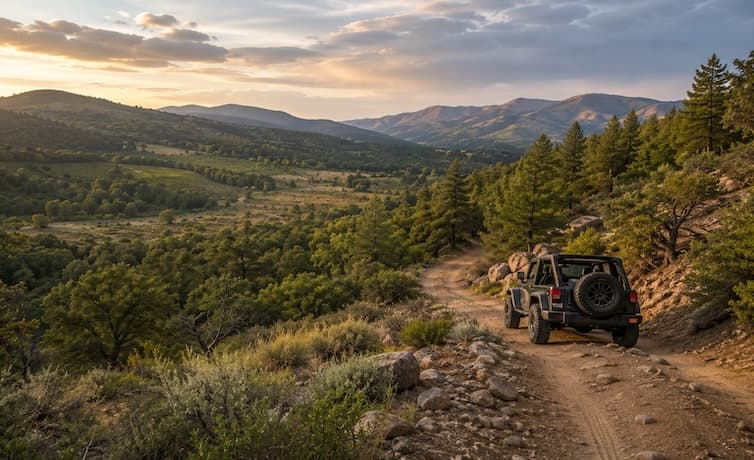
Recreational land is simply rural property bought primarily for leisure and outdoor activities rather than as a full-time residence or as farmland. That usually means wooded or open acreage outside of city limits, with minimal improvements and plenty of room to roam.
People buy recreational land for all kinds of reasons:
Hunting and fishing. Your own private spot for deer, elk, turkey, hogs, waterfowl, or bass.
Camping and glamping. A semi-permanent campsite, an RV pad, a tent platform, or a rustic cabin.
ATVs, dirt bikes, and horses. Room to ride without permits, fees, or crowds.
A family retreat. A place your kids and grandkids will remember forever.
A future homestead. A parcel today, a cabin in five years, a full off-grid home in ten.
Pure peace and quiet. Sometimes the use case is “no use case” — just ownership and escape.
Why Owner Financing Is a Game-Changer for Recreational Buyers
Traditional banks rarely finance raw recreational land. When they do, the terms are punishing: high down payments, short amortization schedules, and strict credit requirements. That’s a problem if you’ve got the itch for a hunting camp but don’t want to drain your savings or sell your truck.
Owner financing solves this. At Classic Country Land, we are the lender. That means:
- No credit check. Your score doesn’t decide if you can buy.
- No background check. We keep the process simple.
- No bank involvement. You deal directly with us.
- Down payments from $999. Not tens of thousands — just $999.
- Fixed monthly payments. Predictable, affordable, straightforward.
- No prepayment penalty. Pay the parcel off whenever you want.
The result? You can own recreational property starting today, and spread the cost over the next several years while you enjoy the land. For most buyers, it’s the difference between “someday” and “this weekend.”
Where to Find the Best Recreational Land
Classic Country Land offers recreational properties in 13 states, each with its own character. Here’s a quick regional guide.
The Mountain West and High Plains
Wyoming and Colorado offer wide-open views, elk and mule deer country, and proximity to national forests. Great for hunters, hikers, and anyone who wants big sky.
New Mexico and Arizona bring unique desert landscapes, dark skies ideal for stargazing, and long camping seasons without much snow.
The Southwest and Central Plains
Texas, Oklahoma, and Kansas offer diverse terrain from Hill Country to the plains, excellent hunting (especially whitetail and turkey), and easier road access year-round.
The South and Ozarks
Arkansas, Missouri, Mississippi, Kentucky, and Tennessee feature wooded hills, hardwood forests, rivers, and some of the best deer and small-game hunting in the country. If you want a shaded cabin site with a creek, this region is hard to beat.
The Pacific Coast
California parcels (typically in more remote northern or desert regions) appeal to buyers who want private land within driving distance of major West Coast metros.
Not sure where to start? Our properties page lets you filter by state, acreage, and price.
What to Look for in a Recreational Parcel
Not all land is created equal. Here are the factors that matter most for recreational use.
Access
Can you actually drive to the property? Year-round or only seasonally? What kind of road — paved, gravel, dirt? Access affects both enjoyment and resale value.
Acreage and Shape
Bigger isn’t always better. A 10-acre parcel with great features can beat a 40-acre parcel that’s all swamp or cliff. Look at the shape, too — long narrow parcels offer less usable recreational area than square ones.
Terrain and Cover
Wooded, open, hilly, flat, rocky, sandy? Different terrain suits different uses. Hunting land benefits from a mix of cover and open areas. Camping lovers may want flat, shaded spots. ATV riders want varied topography.
Water
A creek, pond, or spring dramatically increases a parcel’s recreational value. Even seasonal water can attract wildlife and make the property feel more alive.
Neighbors
Who’s next door? Private ranches, BLM land, timber companies, hunting clubs, and farms all create different experiences. Check surrounding parcels before buying.
Restrictions
Some parcels have covenants (HOA-style rules) that restrict RVs, hunting, or camping. Classic Country Land’s parcels carry minimal covenants that protect your investment from a neighbor devaluing the land next door — but always confirm for the specific parcel you’re eyeing.
Turning Recreational Land into a Long-Term Investment
Here’s something a lot of buyers don’t realize: recreational land isn’t just an expense — it’s an asset. Rural land has historically appreciated steadily over time, especially in states where demand is rising (Tennessee, Texas, and Wyoming are good examples). Owning recreational land often means:
- Growing equity while you hunt, camp, and ride.
- The option to sell later if your life circumstances change.
- A legacy asset to pass down to your kids or grandkids.
- An inflation hedge that keeps pace with rising prices.
We explore this more in our article on land as investment vs. stocks. The short version: a cabin lot today could be a valuable family asset tomorrow.
Common Mistakes to Avoid
A few pitfalls to dodge when shopping for recreational land.
Mistake 1: Buying sight-unseen without asking questions. It’s fine to buy without visiting (we sell plenty of parcels this way), but be sure to ask about access, terrain, easements, and restrictions first.
Mistake 2: Overbuying. Don’t stretch your budget for a 40-acre parcel if a 10-acre parcel would scratch the same itch. Remember, you can always buy more land later.
Mistake 3: Ignoring property taxes. Rural property taxes are typically low, but they exist. Factor them into your long-term budget.
Mistake 4: Skipping owner-financed deals. Some buyers try to arrange bank financing out of habit, then give up when rates and requirements prove unworkable. Owner financing exists precisely to solve this problem — use it.
Mistake 5: Waiting for the “perfect” parcel. The perfect parcel will be bought by somebody else. Solid, good-enough parcels with access and basic features are usually the best bets. Buy one that checks most of your boxes and enjoy it.
How to Get Started With Classic Country Land
The process is refreshingly simple.
1. Browse available parcels .
2. Pick a parcel that fits your budget and goals.
3. Make your down payment — starting at just $999.
4. Sign the owner-financing agreement. No bank, no credit check, no background check.
5. Begin monthly payments and start enjoying your land immediately.
6. Pay it off — on schedule or early — and get the deed free and clear.
We’ve been selling rural land for over 25 years and have been BBB accredited since 2006. When you call, a real human picks up. When you have questions, we answer them. No pressure, no gimmicks.
Ready to Own Your Getaway?
Your weekends could look very different a few months from now. Instead of fighting traffic to the nearest overcrowded park, you could be pulling up to your own driveway, parking under your favorite tree, and breathing in air that belongs — legally, actually, genuinely — to you.
Browse our current recreational listings or call us at 972-649-6200 to talk through your goals. Whether you’re after 5 acres for a deer stand or 40 acres for a full camp, we’ll help you find it.
Frequently Asked Questions
What’s the difference between recreational land and residential land? Recreational land is bought mainly for outdoor activities — hunting, camping, riding — and usually doesn’t have a home on it. Residential land is typically in or near a town and intended for a full-time residence. Many of our parcels can serve either purpose depending on county rules.
Can I camp or park an RV on recreational land immediately after buying? In most cases, yes — but rules vary by county. Always confirm local zoning and any parcel-specific restrictions before setting up long-term RV living. Short weekend camping is usually straightforward.
Do I need insurance on raw recreational land? It’s not required, but many buyers carry a small liability policy (often $100-$300 per year) to protect against accidents on the property.
How small can a recreational parcel be and still be worthwhile? Even a 5-acre parcel can be a great recreational property, especially for camping, hunting in areas with abundant deer, or as a future cabin site. Bigger parcels give more room to roam but cost more.
Can I build a cabin on my recreational land? In most rural counties across our 13 states, yes. Rules vary by county, so check with the local building department for permits and minimum structure requirements.
Ready to find your getaway? Visit classiccountryland.com or call 972-649-6200 today to start your search.
What you pay upfront: $999 down, plus a one-time $249 document fee at closing.
Financing disclosure: Basic-plan payments shown assume $999 down at 10.99% APR, amortized over terms up to 20 years — some contracts include a balloon payment, typically due after three years, when the remaining balance is refinanced or paid. Rates, discounts, and terms are subject to adjustment without notice.
What Is Recreational Land?
Recreational land is simply rural property bought primarily for leisure and outdoor activities rather than as a full-time residence or as farmland. That usually means wooded or open acreage outside of city limits, with minimal improvements and plenty of room to roam.
People buy recreational land for all kinds of reasons:
Hunting and fishing. Your own private spot for deer, elk, turkey, hogs, waterfowl, or bass.
Camping and glamping. A semi-permanent campsite, an RV pad, a tent platform, or a rustic cabin.
ATVs, dirt bikes, and horses. Room to ride without permits, fees, or crowds.
A family retreat. A place your kids and grandkids will remember forever.
A future homestead. A parcel today, a cabin in five years, a full off-grid home in ten.
Pure peace and quiet. Sometimes the use case is “no use case” — just ownership and escape.
Why Owner Financing Is a Game-Changer for Recreational Buyers
Traditional banks rarely finance raw recreational land. When they do, the terms are punishing: high down payments, short amortization schedules, and strict credit requirements. That’s a problem if you’ve got the itch for a hunting camp but don’t want to drain your savings or sell your truck.
Owner financing solves this. At Legacy Land, we are the lender. That means:
- No credit check. Your score doesn’t decide if you can buy.
- No background check. We keep the process simple.
- No bank involvement. You deal directly with us.
- Down payments from $999. Not tens of thousands — just $999.
- Fixed monthly payments. Predictable, affordable, straightforward.
- No prepayment penalty. Pay the parcel off whenever you want.
The result? You can own recreational property starting today, and spread the cost over the next several years while you enjoy the land. For most buyers, it’s the difference between “someday” and “this weekend.”
Where to Find the Best Recreational Land
Legacy Land offers recreational properties in 13 states, each with its own character. Here’s a quick regional guide.
The Mountain West and High Plains
Wyoming and Colorado offer wide-open views, elk and mule deer country, and proximity to national forests. Great for hunters, hikers, and anyone who wants big sky.
New Mexico and Arizona bring unique desert landscapes, dark skies ideal for stargazing, and long camping seasons without much snow.
The Southwest and Central Plains
Texas, Oklahoma, and Kansas offer diverse terrain from Hill Country to the plains, excellent hunting (especially whitetail and turkey), and easier road access year-round.
The South and Ozarks
Arkansas, Missouri, Mississippi, Kentucky, and Tennessee feature wooded hills, hardwood forests, rivers, and some of the best deer and small-game hunting in the country. If you want a shaded cabin site with a creek, this region is hard to beat.
The Pacific Coast
California parcels (typically in more remote northern or desert regions) appeal to buyers who want private land within driving distance of major West Coast metros.
Not sure where to start? Our properties page lets you filter by state, acreage, and price.
What to Look for in a Recreational Parcel
Not all land is created equal. Here are the factors that matter most for recreational use.
Access
Can you actually drive to the property? Year-round or only seasonally? What kind of road — paved, gravel, dirt? Access affects both enjoyment and resale value.
Acreage and Shape
Bigger isn’t always better. A 10-acre parcel with great features can beat a 40-acre parcel that’s all swamp or cliff. Look at the shape, too — long narrow parcels offer less usable recreational area than square ones.
Terrain and Cover
Wooded, open, hilly, flat, rocky, sandy? Different terrain suits different uses. Hunting land benefits from a mix of cover and open areas. Camping lovers may want flat, shaded spots. ATV riders want varied topography.
Water
A creek, pond, or spring dramatically increases a parcel’s recreational value. Even seasonal water can attract wildlife and make the property feel more alive.
Neighbors
Who’s next door? Private ranches, BLM land, timber companies, hunting clubs, and farms all create different experiences. Check surrounding parcels before buying.
Restrictions
Some parcels have covenants (HOA-style rules) that restrict RVs, hunting, or camping. Legacy Land’s parcels carry minimal covenants that protect your investment from a neighbor devaluing the land next door — but always confirm for the specific parcel you’re eyeing.
Turning Recreational Land into a Long-Term Investment
Here’s something a lot of buyers don’t realize: recreational land isn’t just an expense — it’s an asset. Rural land has historically appreciated steadily over time, especially in states where demand is rising (Tennessee, Texas, and Wyoming are good examples). Owning recreational land often means:
- Growing equity while you hunt, camp, and ride.
- The option to sell later if your life circumstances change.
- A legacy asset to pass down to your kids or grandkids.
- An inflation hedge that keeps pace with rising prices.
We explore this more in our article on land as investment vs. stocks. The short version: a cabin lot today could be a valuable family asset tomorrow.
Common Mistakes to Avoid
A few pitfalls to dodge when shopping for recreational land.
Mistake 1: Buying sight-unseen without asking questions. It’s fine to buy without visiting (we sell plenty of parcels this way), but be sure to ask about access, terrain, easements, and restrictions first.
Mistake 2: Overbuying. Don’t stretch your budget for a 40-acre parcel if a 10-acre parcel would scratch the same itch. Remember, you can always buy more land later.
Mistake 3: Ignoring property taxes. Rural property taxes are typically low, but they exist. Factor them into your long-term budget.
Mistake 4: Skipping owner-financed deals. Some buyers try to arrange bank financing out of habit, then give up when rates and requirements prove unworkable. Owner financing exists precisely to solve this problem — use it.
Mistake 5: Waiting for the “perfect” parcel. The perfect parcel will be bought by somebody else. Solid, good-enough parcels with access and basic features are usually the best bets. Buy one that checks most of your boxes and enjoy it.
How to Get Started With Legacy Land
The process is refreshingly simple.
1. Browse available parcels .
2. Pick a parcel that fits your budget and goals.
3. Make your down payment — starting at just $999.
4. Sign the owner-financing agreement. No bank, no credit check, no background check.
5. Begin monthly payments and start enjoying your land immediately.
6. Pay it off — on schedule or early — and get the deed free and clear.
We’ve been selling rural land for over 25 years and have been BBB accredited since 2006. When you call, a real human picks up. When you have questions, we answer them. No pressure, no gimmicks.
Ready to Own Your Getaway?
Your weekends could look very different a few months from now. Instead of fighting traffic to the nearest overcrowded park, you could be pulling up to your own driveway, parking under your favorite tree, and breathing in air that belongs — legally, actually, genuinely — to you.
Browse our current recreational listings or call us at 972-649-6200 to talk through your goals. Whether you’re after 5 acres for a deer stand or 40 acres for a full camp, we’ll help you find it.
Frequently Asked Questions
What’s the difference between recreational land and residential land? Recreational land is bought mainly for outdoor activities — hunting, camping, riding — and usually doesn’t have a home on it. Residential land is typically in or near a town and intended for a full-time residence. Many of our parcels can serve either purpose depending on county rules.
Can I camp or park an RV on recreational land immediately after buying? In most cases, yes — but rules vary by county. Always confirm local zoning and any parcel-specific restrictions before setting up long-term RV living. Short weekend camping is usually straightforward.
Do I need insurance on raw recreational land? It’s not required, but many buyers carry a small liability policy (often $100-$300 per year) to protect against accidents on the property.
How small can a recreational parcel be and still be worthwhile? Even a 5-acre parcel can be a great recreational property, especially for camping, hunting in areas with abundant deer, or as a future cabin site. Bigger parcels give more room to roam but cost more.
Can I build a cabin on my recreational land? In most rural counties across our 13 states, yes. Rules vary by county, so check with the local building department for permits and minimum structure requirements.
Ready to find your getaway? Visit classiccountryland.com or call 972-649-6200 today to start your search.
What you pay upfront: $999 down, plus a one-time $249 document fee at closing.
Financing disclosure: Basic-plan payments shown assume $999 down at 10.99% APR, amortized over terms up to 20 years — some contracts include a balloon payment, typically due after three years, when the remaining balance is refinanced or paid. Rates, discounts, and terms are subject to adjustment without notice.