
Water, Timber, and Terrain: How to Evaluate Land Features Before You Buy
Two listings, same county, same acreage, same price. One is a solid buy; the other will frustrate you for years. The difference usually comes down to features — the water, timber, soil, and terrain that determine what a property can actually do for you. Listing photos rarely tell this story, but a trained eye (and a little homework) can read it quickly.
Here’s how to evaluate the physical features of rural land like someone who’s done it before.
Water: The Feature That Multiplies Value
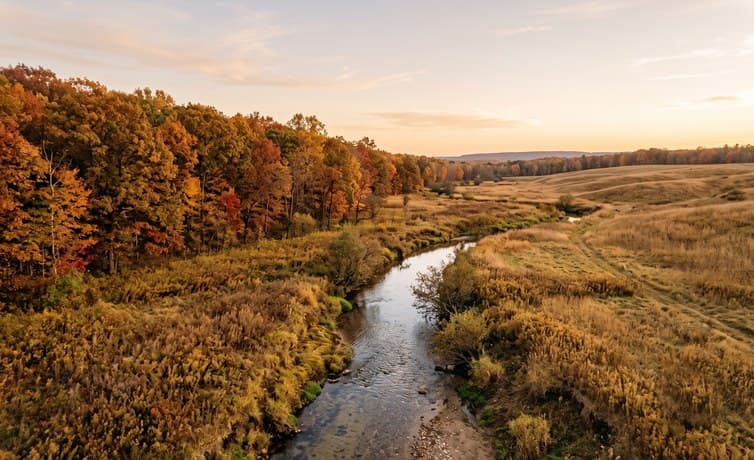
Live water is the single most valuable natural feature on most rural properties. A year-round creek or spring provides wildlife habitat, watering for animals, irrigation potential, and the simple pleasure of owning moving water. Ponds add fishing, waterfowl habitat, and emergency water storage.
When you evaluate water on a property, ask three questions. First, is it seasonal or year-round? Visit in late summer if you can — a creek that runs in April may be a dry ditch in August. Second, where does it come from? Water flowing off neighboring agricultural operations can carry runoff you should know about. Third, what are your rights to use it? Water law varies by state, especially in the West, so confirm what you can legally do before you plan around it.
No natural water? Not a dealbreaker. Check well depths on neighboring parcels (state well-log databases are public in most states), look for rural water district lines along the road, and evaluate pond potential — a drainage with clay soil can often be dammed affordably.
Timber: Asset, Habitat, or Liability?
Wooded land sells for good reason: privacy, beauty, wildlife, and in some cases genuine timber value. But not all trees are equal. Mature hardwoods — oak, walnut, hickory — provide wildlife mast and can hold real market value. Healthy pine stands in the Southeast may be a future income source. On the other hand, a tract choked with cedar, scrub brush, or storm-damaged timber may need years of cleanup before it becomes what you pictured.
Walk the woods and look at trunk diameter, spacing, and species mix. Signs of past select-cutting aren’t necessarily bad — a properly thinned forest is often healthier and better for wildlife than an untouched one. If the listing touts timber value, a consulting forester can cruise the tract for a few hundred dollars and tell you what it’s actually worth.
Soil: The Quiet Dealmaker
Soil determines whether you can grow a garden, install a septic system, build a pond, or support livestock. The USDA Web Soil Survey is free and covers nearly every acre in the country — fifteen minutes there tells you the soil types, drainage characteristics, and suitability ratings for any parcel you’re considering.
If you ever plan to build, pay special attention to septic suitability. Some soils fail percolation tests, which can require engineered systems costing thousands more than a conventional one. Knowing this before you buy is the difference between a footnote and a surprise.
Terrain: Reading the Lay of the Land
Terrain shapes everything — where you can build, how water moves, what it costs to put in a driveway, and how the land feels to use. A few things to evaluate:
- Buildable ground — look for at least one area flat enough for a cabin, camper, or barn without major dirt work.
- Slope and aspect — south-facing slopes get more sun (better for gardens and solar); north-facing slopes hold moisture and timber.
- Drainage — walk the property after rain if possible; low spots that hold water limit your options.
- Views and privacy — elevation changes create both, and they’re features buyers consistently pay for later.
- Road frontage vs. interior — long, narrow tracts with lots of frontage offer easy access but less privacy than blocky parcels.
Putting It All Together
No single feature makes or breaks a property — it’s the combination that matters for your goals. A hunter might happily trade buildable ground for thick cover and a creek. A future homesteader needs soil and sun more than timber. An investor wants features the next buyer will pay a premium for, and water tops that list almost everywhere.
When you browse listings, look for sellers who disclose features honestly and provide maps, photos, and coordinates so you can verify everything yourself. Classic Country Land lists rural properties across more than 20 states with detailed descriptions of features like ponds, streams, and timber — many current tracts include live water — and every property can be visited before you buy.
Found a tract worth walking? Take this guide with you, spend an hour on the ground, and let the land show you what it is. When you’re ready to search, visit www.classiccountryland.com or call 972-649-6200 — with owner financing from $999 down and no credit check, the right property is closer than you think.
Two listings, same county, same acreage, same price. One is a solid buy; the other will frustrate you for years. The difference usually comes down to features — the water, timber, soil, and terrain that determine what a property can actually do for you. Listing photos rarely tell this story, but a trained eye (and a little homework) can read it quickly.
Here’s how to evaluate the physical features of rural land like someone who’s done it before.
Water: The Feature That Multiplies Value
Live water is the single most valuable natural feature on most rural properties. A year-round creek or spring provides wildlife habitat, watering for animals, irrigation potential, and the simple pleasure of owning moving water. Ponds add fishing, waterfowl habitat, and emergency water storage.
When you evaluate water on a property, ask three questions. First, is it seasonal or year-round? Visit in late summer if you can — a creek that runs in April may be a dry ditch in August. Second, where does it come from? Water flowing off neighboring agricultural operations can carry runoff you should know about. Third, what are your rights to use it? Water law varies by state, especially in the West, so confirm what you can legally do before you plan around it.
No natural water? Not a dealbreaker. Check well depths on neighboring parcels (state well-log databases are public in most states), look for rural water district lines along the road, and evaluate pond potential — a drainage with clay soil can often be dammed affordably.
Timber: Asset, Habitat, or Liability?
Wooded land sells for good reason: privacy, beauty, wildlife, and in some cases genuine timber value. But not all trees are equal. Mature hardwoods — oak, walnut, hickory — provide wildlife mast and can hold real market value. Healthy pine stands in the Southeast may be a future income source. On the other hand, a tract choked with cedar, scrub brush, or storm-damaged timber may need years of cleanup before it becomes what you pictured.
Walk the woods and look at trunk diameter, spacing, and species mix. Signs of past select-cutting aren’t necessarily bad — a properly thinned forest is often healthier and better for wildlife than an untouched one. If the listing touts timber value, a consulting forester can cruise the tract for a few hundred dollars and tell you what it’s actually worth.
Soil: The Quiet Dealmaker
Soil determines whether you can grow a garden, install a septic system, build a pond, or support livestock. The USDA Web Soil Survey is free and covers nearly every acre in the country — fifteen minutes there tells you the soil types, drainage characteristics, and suitability ratings for any parcel you’re considering.
If you ever plan to build, pay special attention to septic suitability. Some soils fail percolation tests, which can require engineered systems costing thousands more than a conventional one. Knowing this before you buy is the difference between a footnote and a surprise.
Terrain: Reading the Lay of the Land
Terrain shapes everything — where you can build, how water moves, what it costs to put in a driveway, and how the land feels to use. A few things to evaluate:
- Buildable ground — look for at least one area flat enough for a cabin, camper, or barn without major dirt work.
- Slope and aspect — south-facing slopes get more sun (better for gardens and solar); north-facing slopes hold moisture and timber.
- Drainage — walk the property after rain if possible; low spots that hold water limit your options.
- Views and privacy — elevation changes create both, and they’re features buyers consistently pay for later.
- Road frontage vs. interior — long, narrow tracts with lots of frontage offer easy access but less privacy than blocky parcels.
Putting It All Together
No single feature makes or breaks a property — it’s the combination that matters for your goals. A hunter might happily trade buildable ground for thick cover and a creek. A future homesteader needs soil and sun more than timber. An investor wants features the next buyer will pay a premium for, and water tops that list almost everywhere.
When you browse listings, look for sellers who disclose features honestly and provide maps, photos, and coordinates so you can verify everything yourself. Legacy Land lists rural properties across more than 20 states with detailed descriptions of features like ponds, streams, and timber — many current tracts include live water — and every property can be visited before you buy.
Found a tract worth walking? Take this guide with you, spend an hour on the ground, and let the land show you what it is. When you’re ready to search, visit www.classiccountryland.com or call 972-649-6200 — with owner financing from $999 down and no credit check, the right property is closer than you think.