
How to Get Utilities to Rural, Off-Grid Land
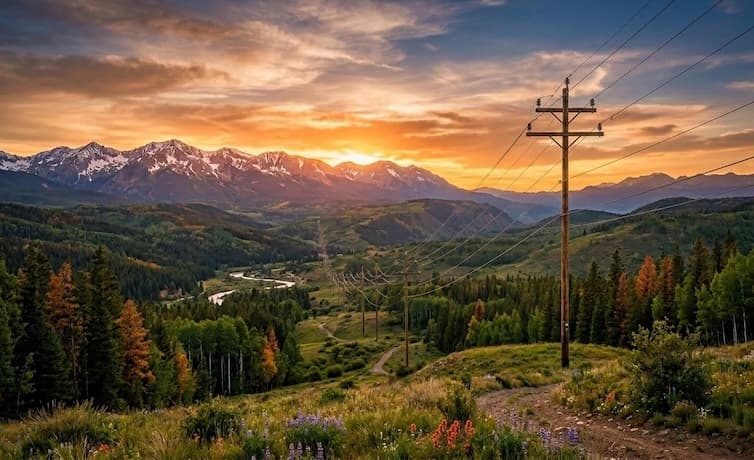
One of the first questions people ask after buying raw land is: how do I get utilities out there? If you’re planning to build a home, set up a cabin, or even just want basic amenities for weekend camping, understanding how to get water, electricity, septic, and internet to raw land is an important part of the process. The good news is that it’s usually very doable — it just takes some planning and research.
At Classic Country Land, we’ve helped thousands of buyers purchase affordable rural acreage across 13 states over the past 25+ years. Many of our customers eventually develop their land, and the utility question comes up in almost every conversation. Here’s what you need to know.
Start by Understanding What’s Already Nearby
Before you dive into utility planning, take stock of what infrastructure already exists near your property. This single step can save you thousands of dollars and weeks of planning.
Check for Existing Utility Easements
Many rural properties already have utility easements running along or near the property line. These are legal rights-of-way that allow utility companies to run power lines, water pipes, or other infrastructure. If there’s an existing easement, connecting to utilities is typically much easier and cheaper.
You can find easement information through the county recorder’s office, on your property deed, or by asking the utility company directly.
Talk to the Neighbors
If there are homes or structures on nearby properties, those neighbors already have utilities. That’s a strong indicator that extending service to your parcel is feasible. Ask your neighbors who their providers are and what their experience was like getting connected. This kind of local knowledge is invaluable.
Contact the County Planning Office
Your county’s planning or building department can tell you which utility providers serve your area, what permits you’ll need, and whether there are any restrictions on your land that could affect utility installation. This should be one of your first calls.
Getting Electricity to Your Property
Electricity is usually the first utility people think about, and it’s often the most straightforward to connect — depending on how far your property is from existing power lines.
Grid Power Connection
Contact your local electric cooperative or utility company and request a service extension. They’ll send someone out to survey the distance from the nearest power line to your desired connection point. Here’s what to expect:
Distance matters. Most utility companies will extend power lines a certain distance for free or at a reduced cost — often the first few hundred feet. Beyond that, you’ll pay per foot for the extension. Costs typically range from $5 to $25 per foot depending on terrain, but can vary widely.
Timeline. Getting grid power extended can take anywhere from a few weeks to several months, depending on the utility company’s workload and how far the extension needs to go.
Permits. You’ll likely need a permit from the county before the utility company will begin work. The utility company can usually guide you through this process.
Off-Grid Power Alternatives
If your property is far from the nearest power line, off-grid power might be more practical and affordable. Common options include:
Solar panels are increasingly popular and affordable. A basic solar setup with battery storage can power lights, a refrigerator, and small appliances. Larger systems can power an entire home. Many states also offer tax credits and incentives for solar installation.
Generators work well as a primary or backup power source. Propane and diesel generators are common on rural properties. They require fuel delivery but provide reliable power on demand.
Wind turbines can supplement solar in areas with consistent wind. Some parts of Oklahoma, Kansas, Texas, and Wyoming are especially well-suited for small wind turbines.
Many rural landowners use a combination of these — solar as the primary source with a generator for backup during cloudy stretches.
Getting Water to Your Property
Water access is critical if you plan to live on your land or use it regularly. You have several options depending on your location and budget.
Connecting to a Municipal or Rural Water System
If your property is near an existing water line, connecting to the local water system is usually the simplest option. Contact your local water district or rural water association to find out:
- Whether service is available to your property
- The cost of a meter and connection (often $1,000 to $5,000)
- Whether you’ll need to pay for any line extension
- Monthly service fees
Rural water districts serve many areas that aren’t covered by city water systems, so don’t assume you’re out of luck just because you’re in a remote area.
Drilling a Well
In many rural areas, a private well is the most common and cost-effective water solution. Here’s what to consider:
Cost. Well drilling typically costs between $5,000 and $15,000, depending on depth and local geology. Shallow wells in areas with high water tables cost less, while deep wells in rocky terrain cost more.
Water quality. Have the water tested after drilling. Most well water is perfectly fine for drinking, but some areas have naturally occurring minerals like iron or sulfur that may need filtration.
Permits. Most states and counties require a permit before drilling a well. Your well driller will usually handle the permit application.
Location. Wells need to be a certain distance from septic systems, property lines, and other structures. Your county health department can tell you the specific setback requirements in your area.
Rainwater Collection
Rainwater harvesting is gaining popularity, especially in drier states like Arizona, New Mexico, and West Texas. A properly designed rainwater collection system with storage tanks and filtration can supply enough water for a household, though regulations vary by state. Check your state and county rules before relying on rainwater as your primary source.
Setting Up a Septic System
If you’re not connected to a municipal sewer system — which is the case for most rural properties — you’ll need a septic system to handle wastewater.
How Septic Systems Work
A septic system collects wastewater from your home in an underground tank, where solids settle and bacteria break down waste. The liquid effluent then drains into a leach field where it filters naturally through the soil. It’s a proven, low-maintenance system that millions of rural homes use.
Getting Started With Septic
Soil test (perc test). Before you can install a septic system, you’ll need a percolation test to determine how well your soil absorbs water. The county health department usually oversees this. If the soil percolates well, you’re cleared for a standard septic system. If not, you may need an engineered or alternative system, which costs more.
Permits. Septic installation requires a permit in virtually every county. Don’t skip this step — an unpermitted system can create major problems if you ever sell the property.
Cost. A standard septic system typically costs between $5,000 and $15,000 installed. Alternative systems for challenging soil conditions can run $15,000 to $30,000 or more.
Placement. The system needs to be a certain distance from your well, property lines, streams, and your home’s foundation. Your installer will help you determine the best location.
Temporary Alternatives
If you’re not ready to install a full septic system right away, some landowners start with a composting toilet or a portable restroom for camping use. These can work well while you’re still in the planning stages of building.
Getting Internet and Phone Service
Staying connected on rural land has gotten much easier in recent years, thanks to advances in satellite and cellular technology.
Cellular Service
Check coverage maps for major carriers before buying, but keep in mind that maps aren’t always accurate in rural areas. If cell service is spotty, a cell signal booster can make a significant difference for properties that are just on the edge of coverage.
Satellite Internet
Satellite internet services have improved dramatically and now offer speeds fast enough for video calls, streaming, and remote work. This has been a game-changer for people who want to live or work on rural land. Service is available essentially anywhere with a clear view of the sky.
Fixed Wireless and DSL
Some rural areas have fixed wireless internet providers or DSL service through the local phone company. Ask neighbors what they use — this is often the best way to find out what’s actually available in a specific area.
How Much Does It Cost to Get Utilities to Raw Land?
Total costs depend heavily on your property’s location and what infrastructure is already nearby. Here’s a rough breakdown for a property that needs everything:
Electricity: $1,000 to $30,000+ for grid connection (depending on distance), or $10,000 to $30,000 for a solar setup with batteries.
Water: $1,000 to $5,000 for a municipal connection, or $5,000 to $15,000 for a private well.
Septic: $5,000 to $15,000 for a standard system, more for engineered systems.
Internet: $300 to $600 for satellite equipment, plus monthly service fees.
A property close to existing infrastructure might cost as little as $10,000 to $15,000 total for all utilities. A remote property requiring off-grid solutions could run $30,000 to $60,000 or more. The key is to research costs before you buy so there are no surprises.
Plan Your Utilities Before You Buy — Or Start Simple
The smartest approach is to think about utilities before you purchase your land. When you’re browsing properties on our site, pay attention to road access, proximity to other developed properties, and any notes about existing utility access.
That said, many of our customers buy land first and develop it over time. There’s nothing wrong with starting with a piece of raw land for camping and recreation, then adding utilities gradually as your budget and plans allow. That’s one of the great things about owning your own land — you get to develop it on your own timeline.
Ready to Find Your Land?
Whether you’re planning to build right away or develop your property over time, the first step is finding the right piece of land at the right price. Classic Country Land offers affordable rural acreage across 13 states with owner financing — no credit check, no background check, and down payments starting at $999.
Browse our available properties today or call us at 972-649-6200 to talk through your plans. We’ve been helping people like you become landowners for over 25 years, and we’d love to help you too.
Frequently Asked Questions
How much does it cost to bring electricity to raw land?
The cost depends primarily on how far your property is from the nearest power line. If you’re close, it might cost $1,000 to $5,000. For properties farther from the grid, costs can range from $10,000 to $30,000 or more. Off-grid solar systems are an increasingly popular alternative, typically costing $10,000 to $30,000 for a full setup.
Do I need a septic system on raw land?
You’ll need a septic system if you plan to build a home or any structure with plumbing on rural land that isn’t connected to a municipal sewer system. Before installation, you’ll need a soil percolation test and a county permit. Standard septic systems typically cost $5,000 to $15,000.
Can I drill a well on any rural property?
In most rural areas, yes, but you’ll need a permit and must follow setback requirements (distance from septic systems, property lines, etc.). Water availability and depth vary by region, so it’s wise to check with local well drillers about conditions in your specific area before purchasing.
Is it possible to live off-grid on raw land?
Absolutely. Many people live comfortably off-grid using solar power, well water or rainwater collection, and septic or composting toilet systems. Satellite internet makes remote work possible from almost anywhere. The initial setup cost varies, but off-grid living can be very affordable once your systems are in place.
Should I check utility access before buying land?
It’s a smart idea to research utility availability before purchasing, as it can significantly affect your development costs. However, many buyers purchase affordable land first and add utilities over time as their budget allows. Either approach works — the important thing is to understand your options so you can plan accordingly.
One of the first questions people ask after buying raw land is: how do I get utilities out there? If you’re planning to build a home, set up a cabin, or even just want basic amenities for weekend camping, understanding how to get water, electricity, septic, and internet to raw land is an important part of the process. The good news is that it’s usually very doable — it just takes some planning and research.
At Legacy Land, we’ve helped thousands of buyers purchase affordable rural acreage across 13 states over the past 25+ years. Many of our customers eventually develop their land, and the utility question comes up in almost every conversation. Here’s what you need to know.
Start by Understanding What’s Already Nearby
Before you dive into utility planning, take stock of what infrastructure already exists near your property. This single step can save you thousands of dollars and weeks of planning.
Check for Existing Utility Easements
Many rural properties already have utility easements running along or near the property line. These are legal rights-of-way that allow utility companies to run power lines, water pipes, or other infrastructure. If there’s an existing easement, connecting to utilities is typically much easier and cheaper.
You can find easement information through the county recorder’s office, on your property deed, or by asking the utility company directly.
Talk to the Neighbors
If there are homes or structures on nearby properties, those neighbors already have utilities. That’s a strong indicator that extending service to your parcel is feasible. Ask your neighbors who their providers are and what their experience was like getting connected. This kind of local knowledge is invaluable.
Contact the County Planning Office
Your county’s planning or building department can tell you which utility providers serve your area, what permits you’ll need, and whether there are any restrictions on your land that could affect utility installation. This should be one of your first calls.
Getting Electricity to Your Property
Electricity is usually the first utility people think about, and it’s often the most straightforward to connect — depending on how far your property is from existing power lines.
Grid Power Connection
Contact your local electric cooperative or utility company and request a service extension. They’ll send someone out to survey the distance from the nearest power line to your desired connection point. Here’s what to expect:
Distance matters. Most utility companies will extend power lines a certain distance for free or at a reduced cost — often the first few hundred feet. Beyond that, you’ll pay per foot for the extension. Costs typically range from $5 to $25 per foot depending on terrain, but can vary widely.
Timeline. Getting grid power extended can take anywhere from a few weeks to several months, depending on the utility company’s workload and how far the extension needs to go.
Permits. You’ll likely need a permit from the county before the utility company will begin work. The utility company can usually guide you through this process.
Off-Grid Power Alternatives
If your property is far from the nearest power line, off-grid power might be more practical and affordable. Common options include:
Solar panels are increasingly popular and affordable. A basic solar setup with battery storage can power lights, a refrigerator, and small appliances. Larger systems can power an entire home. Many states also offer tax credits and incentives for solar installation.
Generators work well as a primary or backup power source. Propane and diesel generators are common on rural properties. They require fuel delivery but provide reliable power on demand.
Wind turbines can supplement solar in areas with consistent wind. Some parts of Oklahoma, Kansas, Texas, and Wyoming are especially well-suited for small wind turbines.
Many rural landowners use a combination of these — solar as the primary source with a generator for backup during cloudy stretches.
Getting Water to Your Property
Water access is critical if you plan to live on your land or use it regularly. You have several options depending on your location and budget.
Connecting to a Municipal or Rural Water System
If your property is near an existing water line, connecting to the local water system is usually the simplest option. Contact your local water district or rural water association to find out:
- Whether service is available to your property
- The cost of a meter and connection (often $1,000 to $5,000)
- Whether you’ll need to pay for any line extension
- Monthly service fees
Rural water districts serve many areas that aren’t covered by city water systems, so don’t assume you’re out of luck just because you’re in a remote area.
Drilling a Well
In many rural areas, a private well is the most common and cost-effective water solution. Here’s what to consider:
Cost. Well drilling typically costs between $5,000 and $15,000, depending on depth and local geology. Shallow wells in areas with high water tables cost less, while deep wells in rocky terrain cost more.
Water quality. Have the water tested after drilling. Most well water is perfectly fine for drinking, but some areas have naturally occurring minerals like iron or sulfur that may need filtration.
Permits. Most states and counties require a permit before drilling a well. Your well driller will usually handle the permit application.
Location. Wells need to be a certain distance from septic systems, property lines, and other structures. Your county health department can tell you the specific setback requirements in your area.
Rainwater Collection
Rainwater harvesting is gaining popularity, especially in drier states like Arizona, New Mexico, and West Texas. A properly designed rainwater collection system with storage tanks and filtration can supply enough water for a household, though regulations vary by state. Check your state and county rules before relying on rainwater as your primary source.
Setting Up a Septic System
If you’re not connected to a municipal sewer system — which is the case for most rural properties — you’ll need a septic system to handle wastewater.
How Septic Systems Work
A septic system collects wastewater from your home in an underground tank, where solids settle and bacteria break down waste. The liquid effluent then drains into a leach field where it filters naturally through the soil. It’s a proven, low-maintenance system that millions of rural homes use.
Getting Started With Septic
Soil test (perc test). Before you can install a septic system, you’ll need a percolation test to determine how well your soil absorbs water. The county health department usually oversees this. If the soil percolates well, you’re cleared for a standard septic system. If not, you may need an engineered or alternative system, which costs more.
Permits. Septic installation requires a permit in virtually every county. Don’t skip this step — an unpermitted system can create major problems if you ever sell the property.
Cost. A standard septic system typically costs between $5,000 and $15,000 installed. Alternative systems for challenging soil conditions can run $15,000 to $30,000 or more.
Placement. The system needs to be a certain distance from your well, property lines, streams, and your home’s foundation. Your installer will help you determine the best location.
Temporary Alternatives
If you’re not ready to install a full septic system right away, some landowners start with a composting toilet or a portable restroom for camping use. These can work well while you’re still in the planning stages of building.
Getting Internet and Phone Service
Staying connected on rural land has gotten much easier in recent years, thanks to advances in satellite and cellular technology.
Cellular Service
Check coverage maps for major carriers before buying, but keep in mind that maps aren’t always accurate in rural areas. If cell service is spotty, a cell signal booster can make a significant difference for properties that are just on the edge of coverage.
Satellite Internet
Satellite internet services have improved dramatically and now offer speeds fast enough for video calls, streaming, and remote work. This has been a game-changer for people who want to live or work on rural land. Service is available essentially anywhere with a clear view of the sky.
Fixed Wireless and DSL
Some rural areas have fixed wireless internet providers or DSL service through the local phone company. Ask neighbors what they use — this is often the best way to find out what’s actually available in a specific area.
How Much Does It Cost to Get Utilities to Raw Land?
Total costs depend heavily on your property’s location and what infrastructure is already nearby. Here’s a rough breakdown for a property that needs everything:
Electricity: $1,000 to $30,000+ for grid connection (depending on distance), or $10,000 to $30,000 for a solar setup with batteries.
Water: $1,000 to $5,000 for a municipal connection, or $5,000 to $15,000 for a private well.
Septic: $5,000 to $15,000 for a standard system, more for engineered systems.
Internet: $300 to $600 for satellite equipment, plus monthly service fees.
A property close to existing infrastructure might cost as little as $10,000 to $15,000 total for all utilities. A remote property requiring off-grid solutions could run $30,000 to $60,000 or more. The key is to research costs before you buy so there are no surprises.
Plan Your Utilities Before You Buy — Or Start Simple
The smartest approach is to think about utilities before you purchase your land. When you’re browsing properties on our site, pay attention to road access, proximity to other developed properties, and any notes about existing utility access.
That said, many of our customers buy land first and develop it over time. There’s nothing wrong with starting with a piece of raw land for camping and recreation, then adding utilities gradually as your budget and plans allow. That’s one of the great things about owning your own land — you get to develop it on your own timeline.
Ready to Find Your Land?
Whether you’re planning to build right away or develop your property over time, the first step is finding the right piece of land at the right price. Legacy Land offers affordable rural acreage across 13 states with owner financing — no credit check, no background check, and down payments starting at $999.
Browse our available properties today or call us at 972-649-6200 to talk through your plans. We’ve been helping people like you become landowners for over 25 years, and we’d love to help you too.
Frequently Asked Questions
How much does it cost to bring electricity to raw land?
The cost depends primarily on how far your property is from the nearest power line. If you’re close, it might cost $1,000 to $5,000. For properties farther from the grid, costs can range from $10,000 to $30,000 or more. Off-grid solar systems are an increasingly popular alternative, typically costing $10,000 to $30,000 for a full setup.
Do I need a septic system on raw land?
You’ll need a septic system if you plan to build a home or any structure with plumbing on rural land that isn’t connected to a municipal sewer system. Before installation, you’ll need a soil percolation test and a county permit. Standard septic systems typically cost $5,000 to $15,000.
Can I drill a well on any rural property?
In most rural areas, yes, but you’ll need a permit and must follow setback requirements (distance from septic systems, property lines, etc.). Water availability and depth vary by region, so it’s wise to check with local well drillers about conditions in your specific area before purchasing.
Is it possible to live off-grid on raw land?
Absolutely. Many people live comfortably off-grid using solar power, well water or rainwater collection, and septic or composting toilet systems. Satellite internet makes remote work possible from almost anywhere. The initial setup cost varies, but off-grid living can be very affordable once your systems are in place.
Should I check utility access before buying land?
It’s a smart idea to research utility availability before purchasing, as it can significantly affect your development costs. However, many buyers purchase affordable land first and add utilities over time as their budget allows. Either approach works — the important thing is to understand your options so you can plan accordingly.