How Much Does an Acre of Land Cost?
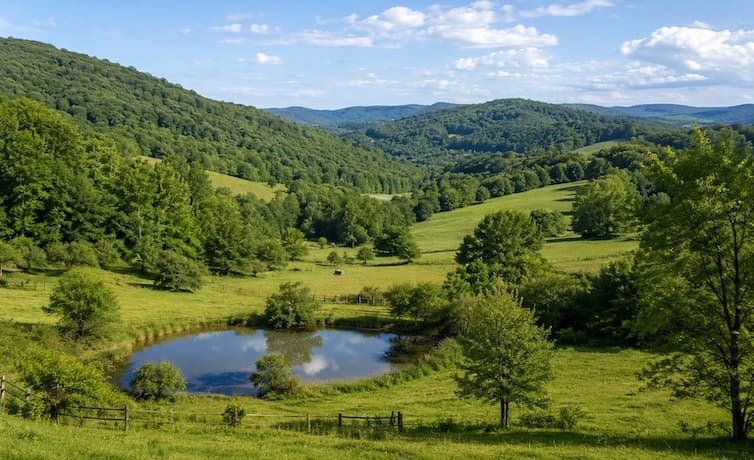
If you’ve been thinking about buying land, one of the first questions that comes to mind is simple: how much does an acre of land cost? The answer depends on a number of factors — where the land is, what it looks like, what you can do with it, and how close it is to towns and cities. But the good news is that affordable rural land is still very much available, especially if you know where to look and how to finance it.
In this guide, we’ll walk through average land prices across the country, what drives those prices up or down, and how you can become a landowner for far less than most people assume — with down payments starting at just $999 through Classic Country Land’s owner financing program.
The National Average: A Starting Point
According to USDA data and recent land market reports, the average cost of an acre of farmland in the United States hovers in the range of $4,000 to $5,000 per acre nationally. But that number is heavily skewed by expensive agricultural land in states like Iowa, Illinois, and Indiana, where productive cropland can exceed $10,000 or even $15,000 per acre.
For rural, recreational, and undeveloped land — the kind most individual buyers are looking for — prices can be dramatically lower. In many parts of the South, Southwest, and Great Plains, you can find land priced well under $2,000 per acre, and sometimes below $500 per acre for remote or unimproved parcels.
Land Prices by State: Where the Deals Are
Land prices vary enormously from state to state. Here’s a general look at where things stand for rural and recreational land in the states where Classic Country Land operates:
Most Affordable States for Land
Arizona — The vast open spaces of Arizona, particularly outside the Phoenix and Tucson metro areas, offer some of the most affordable land in the country. Desert parcels in rural counties can be found for a few hundred dollars per acre.
New Mexico — Similar to Arizona, New Mexico’s wide-open landscapes come with low price tags. The state is popular with off-grid buyers and those seeking solitude and dramatic scenery.
Kansas — The Great Plains offer affordable acreage, especially in the western part of the state. Kansas is a solid option for buyers who want large tracts at low per-acre costs.
Oklahoma — Green, rolling terrain at prices that surprise most first-time buyers. Oklahoma land is excellent for hunting, recreation, and rural living.
Mississippi — Southern hospitality extends to land prices. Rural Mississippi offers wooded and mixed-use land at very competitive rates.
Mid-Range States
Arkansas — Arkansas offers beautiful Ozark terrain, lakes, and forests at moderate prices. It’s one of the most popular states for recreational land buyers.
Missouri — The Show-Me State features diverse geography from the Ozarks to open prairie, with land prices that remain accessible to most budgets.
Kentucky — Rolling bluegrass hills, hardwood forests, and a strong hunting tradition make Kentucky appealing. Prices are moderate and represent good value for the quality of land available.
Wyoming — While some ranch land in Wyoming commands premium prices, there are still affordable parcels in the more remote areas of the state — and the mountain scenery is hard to beat.
Tennessee — Growing in popularity but still more affordable than the national average. Tennessee offers a mix of mountain land, forested tracts, and pastoral countryside.
States With Higher Averages
Texas — Texas land varies widely. West Texas and the Panhandle remain affordable, while land closer to Austin, Dallas, or San Antonio has climbed significantly. Classic Country Land focuses on the more affordable regions.
Colorado — Colorado is similar to Texas in that prices depend heavily on location. Mountain-adjacent land near ski resorts can be expensive, but eastern Colorado and the San Luis Valley still offer reasonable prices for rural acreage.
California — Generally the most expensive state for land, but there are pockets of affordability in the northeastern part of the state and in desert regions far from the coast.
What Affects the Price Per Acre?
Understanding what drives land prices helps you find better deals and make smarter buying decisions. Here are the main factors:
Location and Proximity to Towns
The closer land is to a city, town, or major highway, the more it costs. Remote parcels farther from population centers are almost always cheaper. For buyers who want recreation, privacy, or a weekend retreat, that remoteness is actually a feature, not a drawback.
Road Access
Land with direct road frontage — especially paved road access — commands a premium over parcels accessible only by dirt roads or easements. If you don’t need daily access, a property with more basic access can save you money.
Utilities
Properties with electric, water, and sewer connections are more expensive than those without. If you’re comfortable with off-grid solutions like solar, wells, and septic systems, you can save significantly by choosing land without existing utilities.
Terrain and Features
Flat, cleared land ready for building generally costs more than hilly, wooded, or rocky terrain. But for hunting, camping, and recreation, those natural features are exactly what you want — and they come at a lower price.
Water
Land with a creek, pond, spring, or river frontage is worth more than dry land. Water features add both practical value and recreational appeal.
Zoning and Permitted Uses
Land zoned for residential or commercial development is typically more expensive than land zoned for agricultural use or land with no zoning restrictions at all. In many rural counties where Classic Country Land operates, zoning is minimal or nonexistent, which keeps prices down.
Market Conditions
Like any real estate, land prices are influenced by supply and demand. Interest rates, economic conditions, and migration patterns all play a role. The current market favors buyers who are willing to look at rural areas outside of the highest-demand zones.
How to Buy an Acre of Land for Less Than You Think
Here’s the part most people don’t realize: you don’t need a lot of money to start buying land. The perception that land ownership requires tens of thousands of dollars upfront just isn’t true — especially with the right seller and the right financing.
Owner Financing Changes Everything
Classic Country Land offers in-house owner financing on all their properties. That means:
- No bank approval needed — You deal directly with Classic Country Land.
- No credit check — Your credit score isn’t a factor.
- No background check — The process is simple and judgment-free.
- Down payments from $999 — That’s less than most people spend on a weekend trip.
- Affordable monthly payments — Structured to fit real-world budgets.
With 25+ years of experience and BBB accreditation since 2006, Classic Country Land has made land ownership accessible to thousands of buyers across 13 states.
Think in Total Cost, Not Just Per Acre
When comparing land prices, it’s easy to fixate on the cost per acre. But what matters more is the total purchase price and whether the payment fits your budget. A 5-acre parcel at $600 per acre is a $3,000 purchase — and with owner financing, you could be making payments of well under $100 per month after a small down payment.
That’s the real story behind “how much does an acre of land cost.” For many buyers, the answer is far more affordable than they assumed.
What Can You Do With an Acre of Land?
An acre is roughly the size of a football field (without the end zones). That’s enough space for a wide range of uses:
- A small homesite with a garden and outbuildings
- A campsite with plenty of room to spread out
- A tiny home or cabin with surrounding green space
- A starting point for a larger purchase — many buyers start with one parcel and add adjacent tracts over time
Of course, Classic Country Land offers properties ranging from single lots to larger multi-acre tracts. Whether you want a compact parcel or a sprawling spread, there are options at every price point. Check the full property listings to see what’s currently available.
Tips for Getting the Best Price Per Acre
If you’re shopping for affordable land, keep these strategies in mind:
Look at Less Popular States
States like New Mexico, Kansas, Mississippi, and Oklahoma consistently offer the lowest prices for rural land. If you’re flexible on location, these states deliver the most land for your dollar.
Consider Larger Parcels
The per-acre price often drops as parcel size increases. Buying 10 or 20 acres at once is typically cheaper per acre than buying a single acre.
Choose Properties Without Utilities
If you don’t need electric or water hookups right away, unimproved parcels are significantly cheaper. You can always add utilities later as your budget allows.
Buy in Rural Counties
The farther you get from urban centers, the lower the prices. Rural counties in the states Classic Country Land serves offer the best value.
Use Owner Financing
Avoiding bank fees, appraisal costs, and loan origination charges saves you money beyond just the land price. Owner financing through Classic Country Land streamlines the process and reduces your upfront costs.
Start Your Land Search Today
The cost of an acre of land is more affordable than most people realize — especially in the rural areas of the 13 states where Classic Country Land operates. Whether you’re looking for a recreational getaway, a future homesite, a homesteading property, or a long-term investment, there’s a parcel out there that fits your goals and your budget.
Browse available properties now to see current listings with prices, acreage, and photos. Or call 972-649-6200 to talk with the Classic Country Land team about finding the right piece of land for you. With owner financing, no credit checks, and down payments starting at just $999, land ownership is within reach.
Frequently Asked Questions
What is the cheapest state to buy an acre of land?
Among the states where Classic Country Land operates, Arizona, New Mexico, and Kansas typically offer the lowest per-acre prices for rural land. Remote parcels in these states can be found for just a few hundred dollars per acre. You can explore cheap land for sale across all 13 states on the Classic Country Land website.
Can I buy land with no money down?
While most purchases require some down payment, Classic Country Land keeps the barrier as low as possible — down payments start at just $999. That makes land ownership accessible even if you don’t have a large savings account.
How do I finance a land purchase without a bank?
Owner financing is the most common alternative to bank financing for land purchases. With Classic Country Land, you buy directly from the seller and make monthly payments — no bank application, no credit check, and no background check. Visit the How It Works page for full details.
Is land cheaper in 2026 than it used to be?
Overall land values have risen over the long term, but rural land in many parts of the country remains very affordable compared to developed real estate. States in the South, Southwest, and Great Plains continue to offer strong value, especially for undeveloped recreational and agricultural land.
How much land do I need?
That depends on your plans. A single acre is enough for a small homesite or campsite. Five to ten acres gives you room for privacy, a garden, and recreational use. Twenty or more acres is ideal for hunting, livestock, or true seclusion. Classic Country Land carries properties across a wide range of sizes — browse current listings to compare options.
If you’ve been thinking about buying land, one of the first questions that comes to mind is simple: how much does an acre of land cost? The answer depends on a number of factors — where the land is, what it looks like, what you can do with it, and how close it is to towns and cities. But the good news is that affordable rural land is still very much available, especially if you know where to look and how to finance it.
In this guide, we’ll walk through average land prices across the country, what drives those prices up or down, and how you can become a landowner for far less than most people assume — with down payments starting at just $999 through Legacy Land’s owner financing program.
The National Average: A Starting Point
According to USDA data and recent land market reports, the average cost of an acre of farmland in the United States hovers in the range of $4,000 to $5,000 per acre nationally. But that number is heavily skewed by expensive agricultural land in states like Iowa, Illinois, and Indiana, where productive cropland can exceed $10,000 or even $15,000 per acre.
For rural, recreational, and undeveloped land — the kind most individual buyers are looking for — prices can be dramatically lower. In many parts of the South, Southwest, and Great Plains, you can find land priced well under $2,000 per acre, and sometimes below $500 per acre for remote or unimproved parcels.
Land Prices by State: Where the Deals Are
Land prices vary enormously from state to state. Here’s a general look at where things stand for rural and recreational land in the states where Legacy Land operates:
Most Affordable States for Land
Arizona — The vast open spaces of Arizona, particularly outside the Phoenix and Tucson metro areas, offer some of the most affordable land in the country. Desert parcels in rural counties can be found for a few hundred dollars per acre.
New Mexico — Similar to Arizona, New Mexico’s wide-open landscapes come with low price tags. The state is popular with off-grid buyers and those seeking solitude and dramatic scenery.
Kansas — The Great Plains offer affordable acreage, especially in the western part of the state. Kansas is a solid option for buyers who want large tracts at low per-acre costs.
Oklahoma — Green, rolling terrain at prices that surprise most first-time buyers. Oklahoma land is excellent for hunting, recreation, and rural living.
Mississippi — Southern hospitality extends to land prices. Rural Mississippi offers wooded and mixed-use land at very competitive rates.
Mid-Range States
Arkansas — Arkansas offers beautiful Ozark terrain, lakes, and forests at moderate prices. It’s one of the most popular states for recreational land buyers.
Missouri — The Show-Me State features diverse geography from the Ozarks to open prairie, with land prices that remain accessible to most budgets.
Kentucky — Rolling bluegrass hills, hardwood forests, and a strong hunting tradition make Kentucky appealing. Prices are moderate and represent good value for the quality of land available.
Wyoming — While some ranch land in Wyoming commands premium prices, there are still affordable parcels in the more remote areas of the state — and the mountain scenery is hard to beat.
Tennessee — Growing in popularity but still more affordable than the national average. Tennessee offers a mix of mountain land, forested tracts, and pastoral countryside.
States With Higher Averages
Texas — Texas land varies widely. West Texas and the Panhandle remain affordable, while land closer to Austin, Dallas, or San Antonio has climbed significantly. Legacy Land focuses on the more affordable regions.
Colorado — Colorado is similar to Texas in that prices depend heavily on location. Mountain-adjacent land near ski resorts can be expensive, but eastern Colorado and the San Luis Valley still offer reasonable prices for rural acreage.
California — Generally the most expensive state for land, but there are pockets of affordability in the northeastern part of the state and in desert regions far from the coast.
What Affects the Price Per Acre?
Understanding what drives land prices helps you find better deals and make smarter buying decisions. Here are the main factors:
Location and Proximity to Towns
The closer land is to a city, town, or major highway, the more it costs. Remote parcels farther from population centers are almost always cheaper. For buyers who want recreation, privacy, or a weekend retreat, that remoteness is actually a feature, not a drawback.
Road Access
Land with direct road frontage — especially paved road access — commands a premium over parcels accessible only by dirt roads or easements. If you don’t need daily access, a property with more basic access can save you money.
Utilities
Properties with electric, water, and sewer connections are more expensive than those without. If you’re comfortable with off-grid solutions like solar, wells, and septic systems, you can save significantly by choosing land without existing utilities.
Terrain and Features
Flat, cleared land ready for building generally costs more than hilly, wooded, or rocky terrain. But for hunting, camping, and recreation, those natural features are exactly what you want — and they come at a lower price.
Water
Land with a creek, pond, spring, or river frontage is worth more than dry land. Water features add both practical value and recreational appeal.
Zoning and Permitted Uses
Land zoned for residential or commercial development is typically more expensive than land zoned for agricultural use or land with no zoning restrictions at all. In many rural counties where Legacy Land operates, zoning is minimal or nonexistent, which keeps prices down.
Market Conditions
Like any real estate, land prices are influenced by supply and demand. Interest rates, economic conditions, and migration patterns all play a role. The current market favors buyers who are willing to look at rural areas outside of the highest-demand zones.
How to Buy an Acre of Land for Less Than You Think
Here’s the part most people don’t realize: you don’t need a lot of money to start buying land. The perception that land ownership requires tens of thousands of dollars upfront just isn’t true — especially with the right seller and the right financing.
Owner Financing Changes Everything
Legacy Land offers in-house owner financing on all their properties. That means:
- No bank approval needed — You deal directly with Legacy Land.
- No credit check — Your credit score isn’t a factor.
- No background check — The process is simple and judgment-free.
- Down payments from $999 — That’s less than most people spend on a weekend trip.
- Affordable monthly payments — Structured to fit real-world budgets.
With 25+ years of experience and BBB accreditation since 2006, Legacy Land has made land ownership accessible to thousands of buyers across 13 states.
Think in Total Cost, Not Just Per Acre
When comparing land prices, it’s easy to fixate on the cost per acre. But what matters more is the total purchase price and whether the payment fits your budget. A 5-acre parcel at $600 per acre is a $3,000 purchase — and with owner financing, you could be making payments of well under $100 per month after a small down payment.
That’s the real story behind “how much does an acre of land cost.” For many buyers, the answer is far more affordable than they assumed.
What Can You Do With an Acre of Land?
An acre is roughly the size of a football field (without the end zones). That’s enough space for a wide range of uses:
- A small homesite with a garden and outbuildings
- A campsite with plenty of room to spread out
- A tiny home or cabin with surrounding green space
- A starting point for a larger purchase — many buyers start with one parcel and add adjacent tracts over time
Of course, Legacy Land offers properties ranging from single lots to larger multi-acre tracts. Whether you want a compact parcel or a sprawling spread, there are options at every price point. Check the full property listings to see what’s currently available.
Tips for Getting the Best Price Per Acre
If you’re shopping for affordable land, keep these strategies in mind:
Look at Less Popular States
States like New Mexico, Kansas, Mississippi, and Oklahoma consistently offer the lowest prices for rural land. If you’re flexible on location, these states deliver the most land for your dollar.
Consider Larger Parcels
The per-acre price often drops as parcel size increases. Buying 10 or 20 acres at once is typically cheaper per acre than buying a single acre.
Choose Properties Without Utilities
If you don’t need electric or water hookups right away, unimproved parcels are significantly cheaper. You can always add utilities later as your budget allows.
Buy in Rural Counties
The farther you get from urban centers, the lower the prices. Rural counties in the states Legacy Land serves offer the best value.
Use Owner Financing
Avoiding bank fees, appraisal costs, and loan origination charges saves you money beyond just the land price. Owner financing through Legacy Land streamlines the process and reduces your upfront costs.
Start Your Land Search Today
The cost of an acre of land is more affordable than most people realize — especially in the rural areas of the 13 states where Legacy Land operates. Whether you’re looking for a recreational getaway, a future homesite, a homesteading property, or a long-term investment, there’s a parcel out there that fits your goals and your budget.
Browse available properties now to see current listings with prices, acreage, and photos. Or call 972-649-6200 to talk with the Legacy Land team about finding the right piece of land for you. With owner financing, no credit checks, and down payments starting at just $999, land ownership is within reach.
Frequently Asked Questions
What is the cheapest state to buy an acre of land?
Among the states where Legacy Land operates, Arizona, New Mexico, and Kansas typically offer the lowest per-acre prices for rural land. Remote parcels in these states can be found for just a few hundred dollars per acre. You can explore cheap land for sale across all 13 states on the Legacy Land website.
Can I buy land with no money down?
While most purchases require some down payment, Legacy Land keeps the barrier as low as possible — down payments start at just $999. That makes land ownership accessible even if you don’t have a large savings account.
How do I finance a land purchase without a bank?
Owner financing is the most common alternative to bank financing for land purchases. With Legacy Land, you buy directly from the seller and make monthly payments — no bank application, no credit check, and no background check. Visit the How It Works page for full details.
Is land cheaper in 2026 than it used to be?
Overall land values have risen over the long term, but rural land in many parts of the country remains very affordable compared to developed real estate. States in the South, Southwest, and Great Plains continue to offer strong value, especially for undeveloped recreational and agricultural land.
How much land do I need?
That depends on your plans. A single acre is enough for a small homesite or campsite. Five to ten acres gives you room for privacy, a garden, and recreational use. Twenty or more acres is ideal for hunting, livestock, or true seclusion. Legacy Land carries properties across a wide range of sizes — browse current listings to compare options.