
Kansas Land for Sale: What to Know Before Buying Rural Property in the Sunflower State
Kansas gets stereotyped as one endless wheat field, but drive its back roads and you’ll find rolling Flint Hills pasture, wooded creek bottoms in the east, and canyon-cut rangeland out west. It’s a state where land is still measured in value, not hype — and where buyers who want acreage without coastal prices keep quietly landing.
The Sunflower State also holds a secret that serious hunters already know: some of the biggest whitetail bucks in the country come out of Kansas river bottoms every fall.
Here’s what to know before buying rural land in Kansas.
What Kansas Land Costs
Kansas farmland benchmarks closed 2025 averaging about $5,550 per acre in the eastern part of the state, and values have held broadly steady into 2026. That figure leans toward quality cropland, though — recreational tracts, pasture, and rougher ground often sell for considerably less.
East vs. West
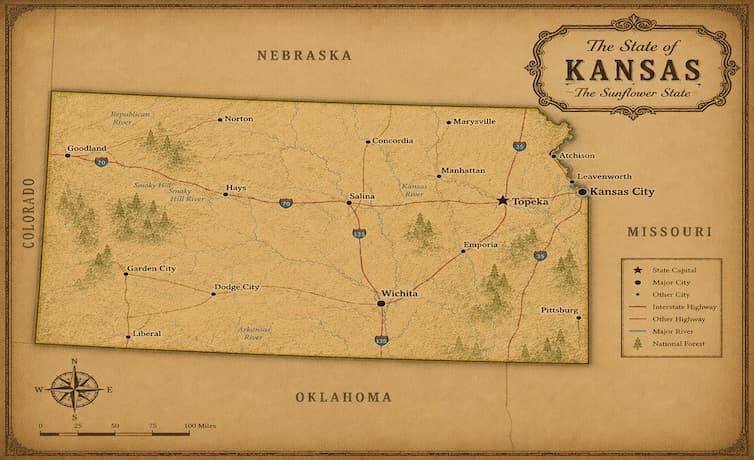
Eastern Kansas, with more rainfall and proximity to Kansas City, Topeka, and Wichita, commands the highest prices. Head west and prices per acre drop steadily as rainfall thins and parcels grow larger.
Cropland vs. Recreational Ground
Tillable ground is priced on productivity. Creek-bottom timber, draws, and native pasture — the ground hunters and weekend owners want — typically costs a fraction of prime cropland.
Where to Look
- The Flint Hills — iconic tallgrass prairie and cattle country with big views and healthy upland bird numbers.
- Southeast Kansas — the most affordable corner of the state, with timbered creek bottoms, strip pits full of fish, and solid deer hunting.
- Central river corridors — the Arkansas, Smoky Hill, and Solomon drainages mix ag fields with travel corridors that funnel deer.
- Northwest canyons and breaks — mule deer, pheasants, and wide-open solitude at some of the lowest per-acre prices around.
Hunting and Recreation
Kansas manages deer conservatively, and it shows: the state consistently produces trophy-class whitetails, and landowners get significant advantages in the permit system. Beyond deer, Kansas offers some of the nation’s best pheasant and quail hunting, plus turkey, waterfowl on the flyways, and farm-pond fishing. Owning even a modest tract of creek-bottom timber puts you in the game every season without begging for permission.
What to Check Before You Buy
- Water — in western Kansas, ask about well depth and whether any water rights convey.
- Access — section-line roads are common, but confirm the parcel actually touches a maintained road.
- Mineral rights — oil and gas activity exists in parts of the state; verify what conveys with the surface.
- Leases — farmland and pasture are often leased to neighbors; check the lease terms and expiration before closing.
- Taxes — rural Kansas property taxes are modest, and agricultural-use valuation keeps them low on qualifying ground.
Living on Kansas Land
Kansas is friendly ground for people who want to do something with their acreage, not just look at it. Rural counties tend to keep building rules light, and the state has a long tradition of self-sufficient living — gardens, small livestock, workshops, and hay ground are everyday sights, not novelties.
Wide-open parcels also suit off-grid setups. Kansas ranks among the best states in the nation for both solar and wind potential, so powering a cabin or weekend camp without a utility hookup is realistic in most of the state. Just confirm county septic and dwelling rules before you commit to a build site.
How Owner Financing Works in Kansas
Traditional lenders are cautious about raw land, especially smaller recreational parcels. Owner financing removes the bank entirely: the seller carries the note, you make a small down payment, and the balance is paid off in fixed monthly installments.
There’s no credit check, no loan committee, and no waiting weeks for an approval that may never come. Terms are agreed up front, payments stay fixed, and the deed process is handled the same way it would be with a bank sale. For buyers who want a hunting camp, a future homesite, or simply a hedge against rising prices, it’s the most direct path to owning Kansas ground.
Find Your Piece of Kansas with Classic Country Land
Classic Country Land has spent more than 25 years making rural land ownership simple, with in-house owner financing on every property and no credit or background checks. Down payments start at just $999, plus a one-time $249 document fee at closing, and fixed monthly payments mean no surprises down the road.
We offer land in Kansas and across 14 states, from wooded creek bottoms to open prairie. Every listing comes with maps, photos, and honest descriptions, and our team is here to answer questions before you buy.
See what’s available now at classiccountryland.com or call 972-649-6200. Your own piece of the Sunflower State might cost less than you think.
Kansas gets stereotyped as one endless wheat field, but drive its back roads and you’ll find rolling Flint Hills pasture, wooded creek bottoms in the east, and canyon-cut rangeland out west. It’s a state where land is still measured in value, not hype — and where buyers who want acreage without coastal prices keep quietly landing.
The Sunflower State also holds a secret that serious hunters already know: some of the biggest whitetail bucks in the country come out of Kansas river bottoms every fall.
Here’s what to know before buying rural land in Kansas.
What Kansas Land Costs
Kansas farmland benchmarks closed 2025 averaging about $5,550 per acre in the eastern part of the state, and values have held broadly steady into 2026. That figure leans toward quality cropland, though — recreational tracts, pasture, and rougher ground often sell for considerably less.
East vs. West
Eastern Kansas, with more rainfall and proximity to Kansas City, Topeka, and Wichita, commands the highest prices. Head west and prices per acre drop steadily as rainfall thins and parcels grow larger.
Cropland vs. Recreational Ground
Tillable ground is priced on productivity. Creek-bottom timber, draws, and native pasture — the ground hunters and weekend owners want — typically costs a fraction of prime cropland.
Where to Look
- The Flint Hills — iconic tallgrass prairie and cattle country with big views and healthy upland bird numbers.
- Southeast Kansas — the most affordable corner of the state, with timbered creek bottoms, strip pits full of fish, and solid deer hunting.
- Central river corridors — the Arkansas, Smoky Hill, and Solomon drainages mix ag fields with travel corridors that funnel deer.
- Northwest canyons and breaks — mule deer, pheasants, and wide-open solitude at some of the lowest per-acre prices around.
Hunting and Recreation
Kansas manages deer conservatively, and it shows: the state consistently produces trophy-class whitetails, and landowners get significant advantages in the permit system. Beyond deer, Kansas offers some of the nation’s best pheasant and quail hunting, plus turkey, waterfowl on the flyways, and farm-pond fishing. Owning even a modest tract of creek-bottom timber puts you in the game every season without begging for permission.
What to Check Before You Buy
- Water — in western Kansas, ask about well depth and whether any water rights convey.
- Access — section-line roads are common, but confirm the parcel actually touches a maintained road.
- Mineral rights — oil and gas activity exists in parts of the state; verify what conveys with the surface.
- Leases — farmland and pasture are often leased to neighbors; check the lease terms and expiration before closing.
- Taxes — rural Kansas property taxes are modest, and agricultural-use valuation keeps them low on qualifying ground.
Living on Kansas Land
Kansas is friendly ground for people who want to do something with their acreage, not just look at it. Rural counties tend to keep building rules light, and the state has a long tradition of self-sufficient living — gardens, small livestock, workshops, and hay ground are everyday sights, not novelties.
Wide-open parcels also suit off-grid setups. Kansas ranks among the best states in the nation for both solar and wind potential, so powering a cabin or weekend camp without a utility hookup is realistic in most of the state. Just confirm county septic and dwelling rules before you commit to a build site.
How Owner Financing Works in Kansas
Traditional lenders are cautious about raw land, especially smaller recreational parcels. Owner financing removes the bank entirely: the seller carries the note, you make a small down payment, and the balance is paid off in fixed monthly installments.
There’s no credit check, no loan committee, and no waiting weeks for an approval that may never come. Terms are agreed up front, payments stay fixed, and the deed process is handled the same way it would be with a bank sale. For buyers who want a hunting camp, a future homesite, or simply a hedge against rising prices, it’s the most direct path to owning Kansas ground.
Find Your Piece of Kansas with Legacy Land
Legacy Land has spent more than 25 years making rural land ownership simple, with in-house owner financing on every property and no credit or background checks. Down payments start at just $999, plus a one-time $249 document fee at closing, and fixed monthly payments mean no surprises down the road.
We offer land in Kansas and across 14 states, from wooded creek bottoms to open prairie. Every listing comes with maps, photos, and honest descriptions, and our team is here to answer questions before you buy.
See what’s available now at classiccountryland.com or call 972-649-6200. Your own piece of the Sunflower State might cost less than you think.