
Do You Need Insurance on Vacant Land? What Rural Owners Should Know
You buy the acreage, sign the paperwork, and a practical question shows up: does an empty piece of land need insurance?
There's no bank requiring it and no house to protect, so plenty of owners never think about it. But land isn't risk-free just because it's empty — the risk simply shows up in a different form than it does with a house.
Here's a plain look at what vacant land insurance covers, what it costs, and when it's worth carrying.
What You're Actually Insuring
With a house, insurance protects the structure. With raw land, there's usually nothing to burn down — so the coverage that matters is liability.
Vacant land liability coverage responds when someone is hurt on your property, or their property is damaged, and they hold you responsible. Common scenarios:
- A hunter, hiker, or neighbor's kid gets injured on your land.
- Someone rides an ATV onto the parcel and wrecks.
- A dead tree on your side falls across a neighbor's fence, vehicle, or outbuilding.
- A visitor you invited out to see the place trips in an old washout.
Whether you'd ultimately be found liable is a separate question. Liability coverage typically pays for the legal defense either way, and defense costs are often the real expense.
What It Costs
This is the part that surprises people: it's cheap.
- Most owners pay roughly $150 to $500 a year for a standard $1 million liability policy on a rural parcel.
- A typical 10-acre tract often lands somewhere around $265 to $300 annually.
- Some carriers price by acreage — a few cents per acre with a minimum premium — so large parcels don't scale the way you'd expect.
Prices run higher in states with more litigation and in situations where the land sees regular recreational use. They run lower on remote parcels nobody visits.
Check Your Homeowners Policy First
Many homeowners policies extend some personal liability coverage to other land you own. Before you buy a separate policy, call your agent and ask directly: does my current policy cover a vacant parcel in another county or another state, and at what limit? Sometimes adding the parcel as a scheduled location on an existing policy costs less than a standalone policy.
When It's Worth Carrying
Strong Case For It
- You let others hunt, camp, or ride on the property.
- You have a hunting lease or any arrangement where someone pays for access.
- The land is near a road, a subdivision, or a school where people wander in.
- There's an attractive hazard on it — a pond, an old well, a collapsing structure, a quarry cut.
- You have real assets a lawsuit could reach.
Weaker Case For It
- The parcel is remote, gated, posted, and rarely visited.
- Your existing homeowners policy already extends adequate liability to it.
- You're closing on the land next month and building right away, at which point a builder's risk or homeowners policy takes over anyway.
What It Won't Cover
Vacant land liability is not property coverage. It generally won't pay for timber lost to fire, a washed-out road, a stolen gate, or damage to improvements you've added. Once you put up a barn, a cabin, or an RV, you need coverage written for structures.
Practical Steps That Lower Your Risk
Insurance is the backstop. These reduce the odds you ever need it:
- Post the boundaries. Signage matters legally in most states, and recreational use statutes in many states limit a landowner's liability to uninvited recreational users.
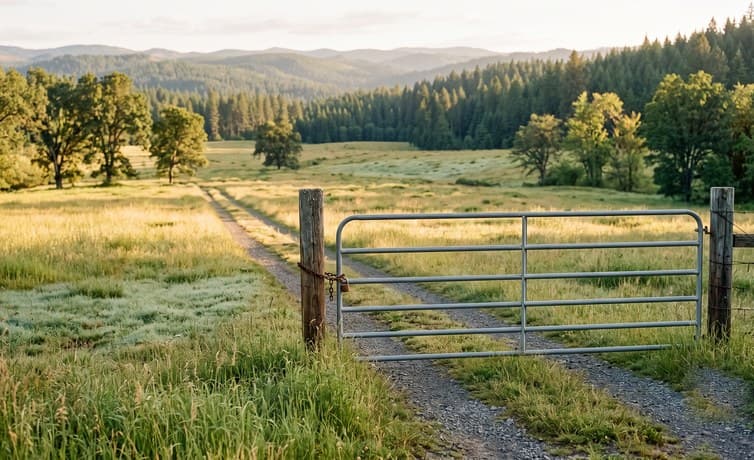
- Gate the access point where practical.
- Deal with obvious hazards — cap old wells, fence a dangerous cut, drop dead trees near boundary lines.
- Put any permission in writing. If you let someone hunt, use a short written agreement.
- Know your state's recreational use statute. Most states protect landowners who allow free recreational access; charging a fee often removes that protection.
- Keep a photo record. A few dated pictures of your gate, signage, and any hazard you've addressed are cheap insurance against a claim that you ignored a known problem.
Almost none of this costs money. Together it turns a parcel that would look careless in a courtroom into one that looks well managed.
Own Land Without the Complications — Classic Country Land
Owning rural property should be straightforward, and that's how Classic Country Land has done it for more than 25 years. We finance our properties in house, which means no credit check, no background check, and no bank telling you what you can and can't do with your acreage.
Down payments start at just $999, there's a one-time $249 document fee at closing, and the monthly payment is fixed. Our land carries only light covenants meant to keep neighboring parcels from being trashed and devalued, so you keep the freedom to hunt, camp, build, or live off grid on land in 20+ states.
Browse listings at classiccountryland.com or call 972-649-6200. This article is general information, not insurance advice — talk to a licensed agent about your specific property.
What you pay upfront: $999 down, plus a one-time $249 document fee at closing.
Financing disclosure: A monthly payment listed with a featured tract is the lowest-payment plan for that tract, stated with the down payment, APR, and term of that same plan. Basic financing is $999 down at 10.99% APR, and every plan is amortized over terms up to 20 years; some contracts include a balloon payment, typically due after three years, when the remaining balance is refinanced or paid. Rates, discounts, and terms are subject to adjustment without notice.
You buy the acreage, sign the paperwork, and a practical question shows up: does an empty piece of land need insurance?
There's no bank requiring it and no house to protect, so plenty of owners never think about it. But land isn't risk-free just because it's empty — the risk simply shows up in a different form than it does with a house.
Here's a plain look at what vacant land insurance covers, what it costs, and when it's worth carrying.
What You're Actually Insuring
With a house, insurance protects the structure. With raw land, there's usually nothing to burn down — so the coverage that matters is liability.
Vacant land liability coverage responds when someone is hurt on your property, or their property is damaged, and they hold you responsible. Common scenarios:
- A hunter, hiker, or neighbor's kid gets injured on your land.
- Someone rides an ATV onto the parcel and wrecks.
- A dead tree on your side falls across a neighbor's fence, vehicle, or outbuilding.
- A visitor you invited out to see the place trips in an old washout.
Whether you'd ultimately be found liable is a separate question. Liability coverage typically pays for the legal defense either way, and defense costs are often the real expense.
What It Costs
This is the part that surprises people: it's cheap.
- Most owners pay roughly $150 to $500 a year for a standard $1 million liability policy on a rural parcel.
- A typical 10-acre tract often lands somewhere around $265 to $300 annually.
- Some carriers price by acreage — a few cents per acre with a minimum premium — so large parcels don't scale the way you'd expect.
Prices run higher in states with more litigation and in situations where the land sees regular recreational use. They run lower on remote parcels nobody visits.
Check Your Homeowners Policy First
Many homeowners policies extend some personal liability coverage to other land you own. Before you buy a separate policy, call your agent and ask directly: does my current policy cover a vacant parcel in another county or another state, and at what limit? Sometimes adding the parcel as a scheduled location on an existing policy costs less than a standalone policy.
When It's Worth Carrying
Strong Case For It
- You let others hunt, camp, or ride on the property.
- You have a hunting lease or any arrangement where someone pays for access.
- The land is near a road, a subdivision, or a school where people wander in.
- There's an attractive hazard on it — a pond, an old well, a collapsing structure, a quarry cut.
- You have real assets a lawsuit could reach.
Weaker Case For It
- The parcel is remote, gated, posted, and rarely visited.
- Your existing homeowners policy already extends adequate liability to it.
- You're closing on the land next month and building right away, at which point a builder's risk or homeowners policy takes over anyway.
What It Won't Cover
Vacant land liability is not property coverage. It generally won't pay for timber lost to fire, a washed-out road, a stolen gate, or damage to improvements you've added. Once you put up a barn, a cabin, or an RV, you need coverage written for structures.
Practical Steps That Lower Your Risk
Insurance is the backstop. These reduce the odds you ever need it:
- Post the boundaries. Signage matters legally in most states, and recreational use statutes in many states limit a landowner's liability to uninvited recreational users.
- Gate the access point where practical.
- Deal with obvious hazards — cap old wells, fence a dangerous cut, drop dead trees near boundary lines.
- Put any permission in writing. If you let someone hunt, use a short written agreement.
- Know your state's recreational use statute. Most states protect landowners who allow free recreational access; charging a fee often removes that protection.
- Keep a photo record. A few dated pictures of your gate, signage, and any hazard you've addressed are cheap insurance against a claim that you ignored a known problem.
Almost none of this costs money. Together it turns a parcel that would look careless in a courtroom into one that looks well managed.
Own Land Without the Complications — Legacy Land
Owning rural property should be straightforward, and that's how Legacy Land has done it for more than 25 years. We finance our properties in house, which means no credit check, no background check, and no bank telling you what you can and can't do with your acreage.
Down payments start at just $999, there's a one-time $249 document fee at closing, and the monthly payment is fixed. Our land carries only light covenants meant to keep neighboring parcels from being trashed and devalued, so you keep the freedom to hunt, camp, build, or live off grid on land in 20+ states.
Browse listings at classiccountryland.com or call 972-649-6200. This article is general information, not insurance advice — talk to a licensed agent about your specific property.
What you pay upfront: $999 down, plus a one-time $249 document fee at closing.
Financing disclosure: A monthly payment listed with a featured tract is the lowest-payment plan for that tract, stated with the down payment, APR, and term of that same plan. Basic financing is $999 down at 10.99% APR, and every plan is amortized over terms up to 20 years; some contracts include a balloon payment, typically due after three years, when the remaining balance is refinanced or paid. Rates, discounts, and terms are subject to adjustment without notice.