
How to Buy Land Remotely: A Step-by-Step Guide for Out-of-State Buyers
More land buyers than ever are purchasing property in states they don’t live in. Maybe the affordable acreage is two states away, or the retirement plan is in the Ozarks while the paycheck is still in the city. Whatever the reason, buying land remotely has become normal — and with the right process, it’s safe.
The internet gives you most of the tools you need. Here’s a step-by-step approach that experienced remote buyers use to avoid surprises.
Step 1: Research the Market From Your Couch
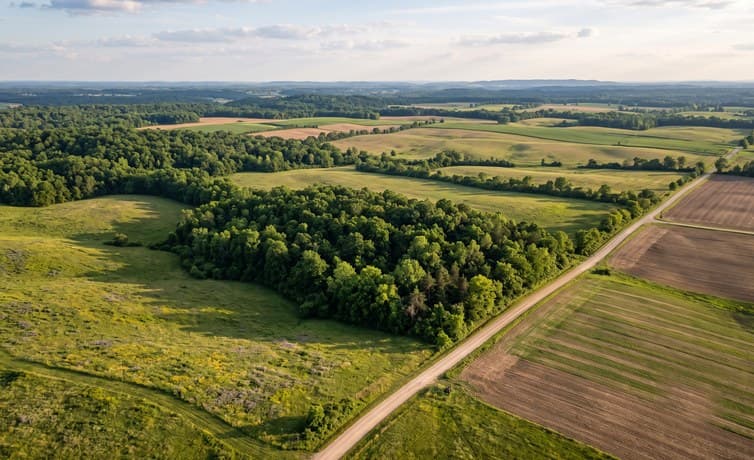
Before you fall in love with a single listing, learn the area. Study prices for comparable parcels in the same county so you know what land actually trades for. Look at the region on satellite view — is the parcel surrounded by forest, farms, or a subdivision? Read up on the county: taxes, climate, distance to the nearest town, hospital, and supply store.
Free tools do heavy lifting here: county GIS and assessor websites show parcel lines, ownership, and tax history; FEMA flood maps flag water risk; the USDA Web Soil Survey reveals septic and building suitability.
Step 2: Verify the Seller
Remote buying works when the seller is legitimate — and fails when they’re not. Check how long the company has been in business, read independent reviews, and look for a BBB rating. A real seller will have a physical address, a working phone number staffed by actual people, and clear answers about title.
Be cautious of anyone who pressures you to wire money before you’ve verified anything, can’t produce a legal description of the property, or refuses to let you visit.
Step 3: Study the Property Like You’re Standing on It
Modern listings can tell you nearly everything if you know what to ask for:
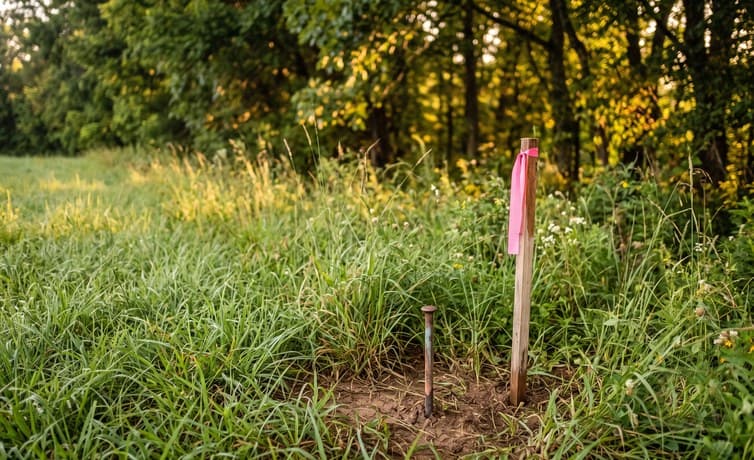
- Exact GPS coordinates and corner markers, so you can find the parcel on any mapping app
- Plat map or survey showing boundaries and easements
- Photos and video of the actual property — not just the county
- Road access details: is it county-maintained, gravel, or a recorded easement?
- Utilities: power at the road, well depths nearby, or fully off-grid?
Drop the coordinates into satellite view and “walk” the boundaries yourself. Check the elevation profile. Look at neighboring parcels and how they’re used.
Step 4: Visit If You Can — Send a Proxy If You Can’t
Nothing replaces boots on the ground. Reputable sellers encourage visits and will provide directions and gate codes. If the drive isn’t practical, you have options: hire a local land agent or surveyor to walk it, ask a friend in the region, or request a live video walkthrough — a seller with nothing to hide will happily FaceTime you from the property line.
Step 5: Close Safely
Remote closings are routine now. Documents can be signed electronically or through the mail with a notary, and payments should always go through verifiable channels with written receipts. Make sure you receive a purchase agreement that includes the legal description, the full payment terms, and — if you’re using owner financing — the interest rate, term, and what happens when the balance is paid.
With owner financing, the process is often simpler than a bank closing: no appraisal delays and no underwriting. Classic Country Land, for example, closes with buyers in all 50 states on properties across 20+ owner-financed states, with no credit check and down payments starting at just $999.
Red Flags That Should Stop You Cold
Most remote purchases go smoothly, but the exceptions follow patterns. Walk away — or at least slow way down — if you encounter any of these:
- A seller who can’t or won’t provide the parcel number and legal description
- Pressure to wire a deposit “today” to hold the property, before you’ve verified anything
- Photos that don’t match the coordinates when you check satellite view
- No recorded access — “you can just drive across the neighbor’s field” is not access
- A price dramatically below every comparable parcel in the county with no explanation
None of these are common with established companies, which is exactly the point: decades in business, real reviews, and a physical operation are the strongest fraud protection a remote buyer has.
Buy From a Distance, Own for a Lifetime
Thousands of people successfully buy rural land remotely every year — the difference between a great outcome and a horror story is process and seller trust. Do the research, verify everything in writing, and work with a seller who’s been doing this for decades.
Ready to start the search? Browse detailed listings with maps, photos, and coordinates at www.classiccountryland.com, or call 972-649-6200 — the team helps out-of-state buyers every day and can answer county-level questions before you ever make the drive.
More land buyers than ever are purchasing property in states they don’t live in. Maybe the affordable acreage is two states away, or the retirement plan is in the Ozarks while the paycheck is still in the city. Whatever the reason, buying land remotely has become normal — and with the right process, it’s safe.
The internet gives you most of the tools you need. Here’s a step-by-step approach that experienced remote buyers use to avoid surprises.
Step 1: Research the Market From Your Couch
Before you fall in love with a single listing, learn the area. Study prices for comparable parcels in the same county so you know what land actually trades for. Look at the region on satellite view — is the parcel surrounded by forest, farms, or a subdivision? Read up on the county: taxes, climate, distance to the nearest town, hospital, and supply store.
Free tools do heavy lifting here: county GIS and assessor websites show parcel lines, ownership, and tax history; FEMA flood maps flag water risk; the USDA Web Soil Survey reveals septic and building suitability.
Step 2: Verify the Seller
Remote buying works when the seller is legitimate — and fails when they’re not. Check how long the company has been in business, read independent reviews, and look for a BBB rating. A real seller will have a physical address, a working phone number staffed by actual people, and clear answers about title.
Be cautious of anyone who pressures you to wire money before you’ve verified anything, can’t produce a legal description of the property, or refuses to let you visit.
Step 3: Study the Property Like You’re Standing on It
Modern listings can tell you nearly everything if you know what to ask for:
- Exact GPS coordinates and corner markers, so you can find the parcel on any mapping app
- Plat map or survey showing boundaries and easements
- Photos and video of the actual property — not just the county
- Road access details: is it county-maintained, gravel, or a recorded easement?
- Utilities: power at the road, well depths nearby, or fully off-grid?
Drop the coordinates into satellite view and “walk” the boundaries yourself. Check the elevation profile. Look at neighboring parcels and how they’re used.
Step 4: Visit If You Can — Send a Proxy If You Can’t
Nothing replaces boots on the ground. Reputable sellers encourage visits and will provide directions and gate codes. If the drive isn’t practical, you have options: hire a local land agent or surveyor to walk it, ask a friend in the region, or request a live video walkthrough — a seller with nothing to hide will happily FaceTime you from the property line.
Step 5: Close Safely
Remote closings are routine now. Documents can be signed electronically or through the mail with a notary, and payments should always go through verifiable channels with written receipts. Make sure you receive a purchase agreement that includes the legal description, the full payment terms, and — if you’re using owner financing — the interest rate, term, and what happens when the balance is paid.
With owner financing, the process is often simpler than a bank closing: no appraisal delays and no underwriting. Legacy Land, for example, closes with buyers in all 50 states on properties across 20+ owner-financed states, with no credit check and down payments starting at just $999.
Red Flags That Should Stop You Cold
Most remote purchases go smoothly, but the exceptions follow patterns. Walk away — or at least slow way down — if you encounter any of these:
- A seller who can’t or won’t provide the parcel number and legal description
- Pressure to wire a deposit “today” to hold the property, before you’ve verified anything
- Photos that don’t match the coordinates when you check satellite view
- No recorded access — “you can just drive across the neighbor’s field” is not access
- A price dramatically below every comparable parcel in the county with no explanation
None of these are common with established companies, which is exactly the point: decades in business, real reviews, and a physical operation are the strongest fraud protection a remote buyer has.
Buy From a Distance, Own for a Lifetime
Thousands of people successfully buy rural land remotely every year — the difference between a great outcome and a horror story is process and seller trust. Do the research, verify everything in writing, and work with a seller who’s been doing this for decades.
Ready to start the search? Browse detailed listings with maps, photos, and coordinates at www.classiccountryland.com, or call 972-649-6200 — the team helps out-of-state buyers every day and can answer county-level questions before you ever make the drive.