
Michigan Land for Sale: A Buyer's Guide to the Great Lakes State
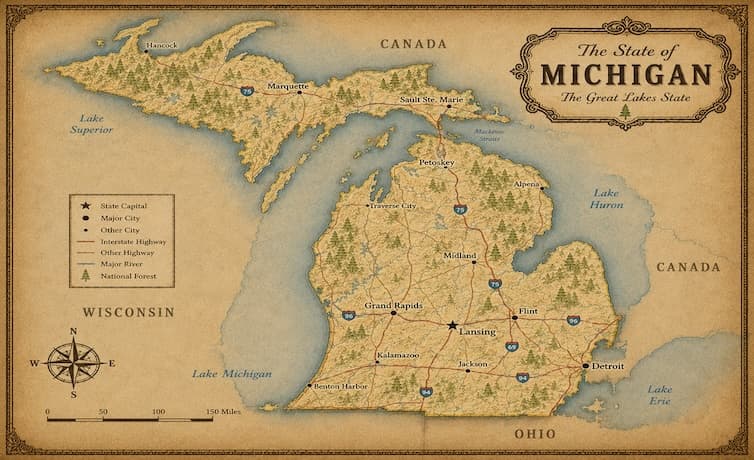
Michigan doesn't always come up first when people talk about buying rural land, and that's exactly why it deserves a closer look. Between the two peninsulas you'll find millions of acres of hardwood forest, thousands of inland lakes, trout streams, and some of the best whitetail deer hunting in the country.
The Great Lakes State also remains surprisingly affordable once you get away from the cities and the shoreline. Remote acreage in the Upper Peninsula still trades at prices that seem borrowed from another decade.
If you've been thinking about a hunting camp, a cabin in the woods, or simply a piece of ground to call your own, here's what you should know before buying land in Michigan.
Why Michigan Is Worth a Look
Michigan offers something few states can match: water everywhere. The state touches four of the five Great Lakes and holds more than 11,000 inland lakes, plus tens of thousands of miles of rivers and streams. For buyers who want fishing, paddling, or simply a creek running through the back forty, that matters.
The state is also heavily forested. Roughly half of Michigan is woodland, much of it northern hardwoods, pine, and aspen — cover that supports deer, turkey, grouse, and black bear. Add four true seasons, established snowmobile and ORV trail networks, and enormous tracts of public land bordering private parcels, and you get a state built for outdoor life.
What Land Costs in Michigan
Prices vary widely by region, so it pays to know the market before you shop.
Statewide averages
Recent market data puts Michigan farmland at roughly $6,800 per acre on average, and the state has seen steady appreciation as hunters and out-of-state buyers compete for good parcels.
Where the bargains are
Recreational and remote acreage runs far below the farmland average. Remote parcels in the Upper Peninsula have been trading around $1,200 per acre, while hunting and timber tracts in the northern Lower Peninsula often sell between $1,800 and $4,500 per acre. Southern counties near cities command far more.
As always, verify current prices for the specific county you're considering — averages hide a lot of variation.
Where to Look: Michigan's Land Regions
The Upper Peninsula
The U.P. is Michigan's frontier — vast, quiet, and cheap by national standards. Expect big woods, harsh winters, and neighbors measured in miles. It's ideal for hunting camps and off-grid retreats.
The Northern Lower Peninsula
The northern Lower offers a middle ground: still rural and affordable, but closer to towns, hospitals, and paved roads. Counties in this belt are classic cabin-and-deer-camp country.
Mid- and Southern Michigan
Farther south, land shifts toward farm ground and homesites. Prices climb, but so does convenience — better road access, utilities nearby, and shorter drives from Detroit, Grand Rapids, and Lansing.
What to Check Before You Buy
Michigan land rewards buyers who do their homework. Walk through this list before committing:
- Legal access. Confirm the parcel touches a public road or carries a recorded easement. Landlocked parcels are common in big-woods country.
- Wetlands. Michigan has extensive regulated wetlands. Check whether low ground on the parcel limits building or requires permits.
- Winter access. Some seasonal roads aren't plowed. If you want year-round use, confirm the county maintains the road in winter.
- Soil and septic. If you plan to build, ask whether nearby parcels have passed perc tests for septic systems.
- Property taxes. Michigan taxes vary by township; vacant land is generally inexpensive to hold, but confirm the actual bill.
- Snow load and utilities. Building in the U.P. means engineering for serious snow, and power lines may be a long way off.
What You Can Do with Michigan Land
Owners put Michigan acreage to work in all the classic ways: deer and turkey hunting, building a cabin or barndominium, camping and RV weekends, cutting firewood and timber, tapping maples, or simply holding a hard asset that tends to appreciate. Many parcels also border state or federal forest, which effectively extends your hunting and hiking ground by thousands of acres without adding a dime to the price. With light, sensible covenants protecting property values — and no HOA looking over your shoulder — you keep the freedoms that matter: camp, hunt, build, or go off-grid.
Find Your Michigan Land with Classic Country Land
Classic Country Land has spent more than 25 years helping everyday buyers become landowners across 20+ states. Every property comes with in-house owner financing — no credit check, no background check, and down payments as low as $999. Monthly payments are set to fit real budgets, and you can complete the whole purchase online.
Browse our available properties at classiccountryland.com or call us at 972-649-6200. Your piece of the Great Lakes State might be closer than you think.
What you pay upfront: $999 down, plus a one-time $249 document fee at closing.
Financing disclosure: Basic-plan payments shown assume $999 down at 10.99% APR, amortized over terms up to 20 years — some contracts include a balloon payment, typically due after three years, when the remaining balance is refinanced or paid. Rates, discounts, and terms are subject to adjustment without notice.
Michigan doesn't always come up first when people talk about buying rural land, and that's exactly why it deserves a closer look. Between the two peninsulas you'll find millions of acres of hardwood forest, thousands of inland lakes, trout streams, and some of the best whitetail deer hunting in the country.
The Great Lakes State also remains surprisingly affordable once you get away from the cities and the shoreline. Remote acreage in the Upper Peninsula still trades at prices that seem borrowed from another decade.
If you've been thinking about a hunting camp, a cabin in the woods, or simply a piece of ground to call your own, here's what you should know before buying land in Michigan.
Why Michigan Is Worth a Look
Michigan offers something few states can match: water everywhere. The state touches four of the five Great Lakes and holds more than 11,000 inland lakes, plus tens of thousands of miles of rivers and streams. For buyers who want fishing, paddling, or simply a creek running through the back forty, that matters.
The state is also heavily forested. Roughly half of Michigan is woodland, much of it northern hardwoods, pine, and aspen — cover that supports deer, turkey, grouse, and black bear. Add four true seasons, established snowmobile and ORV trail networks, and enormous tracts of public land bordering private parcels, and you get a state built for outdoor life.
What Land Costs in Michigan
Prices vary widely by region, so it pays to know the market before you shop.
Statewide averages
Recent market data puts Michigan farmland at roughly $6,800 per acre on average, and the state has seen steady appreciation as hunters and out-of-state buyers compete for good parcels.
Where the bargains are
Recreational and remote acreage runs far below the farmland average. Remote parcels in the Upper Peninsula have been trading around $1,200 per acre, while hunting and timber tracts in the northern Lower Peninsula often sell between $1,800 and $4,500 per acre. Southern counties near cities command far more.
As always, verify current prices for the specific county you're considering — averages hide a lot of variation.
Where to Look: Michigan's Land Regions
The Upper Peninsula
The U.P. is Michigan's frontier — vast, quiet, and cheap by national standards. Expect big woods, harsh winters, and neighbors measured in miles. It's ideal for hunting camps and off-grid retreats.
The Northern Lower Peninsula
The northern Lower offers a middle ground: still rural and affordable, but closer to towns, hospitals, and paved roads. Counties in this belt are classic cabin-and-deer-camp country.
Mid- and Southern Michigan
Farther south, land shifts toward farm ground and homesites. Prices climb, but so does convenience — better road access, utilities nearby, and shorter drives from Detroit, Grand Rapids, and Lansing.
What to Check Before You Buy
Michigan land rewards buyers who do their homework. Walk through this list before committing:
- Legal access. Confirm the parcel touches a public road or carries a recorded easement. Landlocked parcels are common in big-woods country.
- Wetlands. Michigan has extensive regulated wetlands. Check whether low ground on the parcel limits building or requires permits.
- Winter access. Some seasonal roads aren't plowed. If you want year-round use, confirm the county maintains the road in winter.
- Soil and septic. If you plan to build, ask whether nearby parcels have passed perc tests for septic systems.
- Property taxes. Michigan taxes vary by township; vacant land is generally inexpensive to hold, but confirm the actual bill.
- Snow load and utilities. Building in the U.P. means engineering for serious snow, and power lines may be a long way off.
What You Can Do with Michigan Land
Owners put Michigan acreage to work in all the classic ways: deer and turkey hunting, building a cabin or barndominium, camping and RV weekends, cutting firewood and timber, tapping maples, or simply holding a hard asset that tends to appreciate. Many parcels also border state or federal forest, which effectively extends your hunting and hiking ground by thousands of acres without adding a dime to the price. With light, sensible covenants protecting property values — and no HOA looking over your shoulder — you keep the freedoms that matter: camp, hunt, build, or go off-grid.
Find Your Michigan Land with Legacy Land
Legacy Land has spent more than 25 years helping everyday buyers become landowners across 20+ states. Every property comes with in-house owner financing — no credit check, no background check, and down payments as low as $999. Monthly payments are set to fit real budgets, and you can complete the whole purchase online.
Browse our available properties at classiccountryland.com or call us at 972-649-6200. Your piece of the Great Lakes State might be closer than you think.
What you pay upfront: $999 down, plus a one-time $249 document fee at closing.
Financing disclosure: Basic-plan payments shown assume $999 down at 10.99% APR, amortized over terms up to 20 years — some contracts include a balloon payment, typically due after three years, when the remaining balance is refinanced or paid. Rates, discounts, and terms are subject to adjustment without notice.