
Buying Land for Horses: What to Look For in a Horse Property
For a lot of land buyers, the dream has four hooves. Keeping horses at home — instead of paying board at someone else's barn — is one of the most common reasons people start shopping for rural acreage.
But horse property has its own rules. A parcel that's perfect for a hunting camp or a weekend getaway can be all wrong for horses, and the features that matter most — soil, grass, water, and access — rarely show up anywhere in the listing photos.
Here's what experienced horse owners look for when they buy land, and how to avoid the mistakes that turn a dream property into a daily headache.
How Many Acres Do Horses Really Need?
The standard guideline from university extension programs is about two acres of good pasture for the first horse and one additional acre for each horse after that — if you expect pasture to supply most of their forage during the growing season.
That number moves with conditions:
- Lush, well-managed pasture in temperate climates can support a horse on one to three acres.
- Dry or poor ground requires far more — unirrigated western rangeland can take 30 acres or more per horse.
- Hay-fed horses need much less space. A dry lot for turnout can be as small as a tenth of an acre, with hay providing the nutrition.
The honest takeaway: a 5 to 10 acre parcel comfortably handles two or three horses almost anywhere, and buying a little extra ground gives you room to rest and rotate pastures. Rotation matters more than most new owners expect — resting each paddock for a few weeks lets grass recover, cuts your hay bill, and breaks parasite cycles. If you can afford the acreage to cross-fence into three or four paddocks, your pastures and your horses will both be healthier for it.
Pasture Quality Beats Pasture Quantity
Ten acres of weeds won't feed a horse. When you walk a prospective property, look down.
Grass and soil
Established grass cover, reasonably level ground, and soil that isn't pure sand or solid clay make pasture management far easier. Bare dirt, heavy weeds, or eroded gullies mean years of reseeding.
Toxic plants and hazards
Scan for common trouble: wild cherry, red maple, and black walnut trees, plus junk piles, old fence wire, and trash in the grass. All are fixable — but factor in the cleanup.
Drainage
Horses standing in mud develop hoof problems fast. High, well-drained ground for at least part of the property is worth paying for.
Water, Shelter, and Fencing
A reliable water source
A horse drinks 5 to 10 gallons a day, more in summer. A well, pond, or year-round creek is a major asset. If the parcel has no water source yet, price out a well before you buy.
Natural shelter
Horses handle weather well with a windbreak. A tree line or low hill that blocks prevailing winter wind reduces or delays the need for a barn — many owners start with a simple run-in shed.
Fencing you can live with
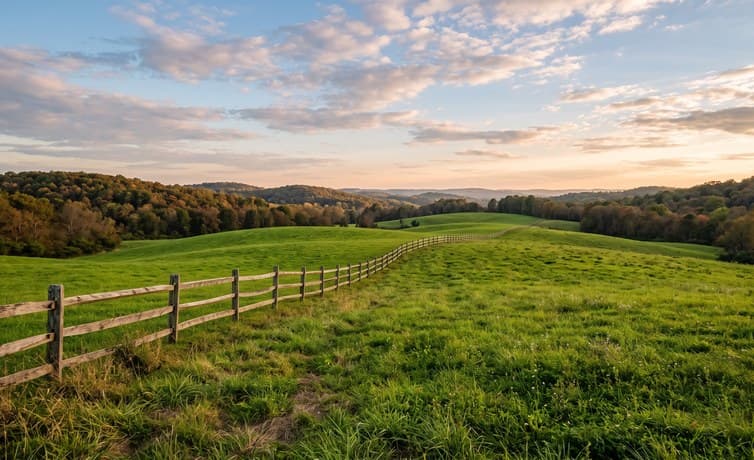
Existing fence is a bonus but inspect it: barbed wire is a horse injury waiting to happen. Budget for smooth wire, woven wire, or electric tape if you're fencing raw land, and remember that a square parcel fences cheaper than a long, narrow one.
Location and Land-Use Questions to Ask
Before you commit, run through the practical checklist:
- Can you keep horses there? Rural, agriculturally zoned land rarely restricts livestock, but always confirm the county's rules and read the property's covenants.
- Truck and trailer access — you'll be hauling hay, shavings, and horses. Confirm the road handles a truck and trailer year-round.
- Hay availability — buying local hay is far cheaper than shipping it. A parcel in farm country solves this automatically.
- Vets and farriers — check that a large-animal vet and a farrier serve the area.
The good news: the affordable rural parcels where horse keeping works best are exactly the kind of land that's still within reach. Light covenants that keep neighbors from letting junk pile up actually protect your investment, while leaving you free to build a barn, cross-fence pastures, and live the horse life on your terms.
Find Your Horse Property with Classic Country Land
Classic Country Land has helped buyers become landowners for more than 25 years, with rural acreage across 20+ states — including open, pasture-ready parcels in prime horse country. Our in-house owner financing means no credit check, no background check, and down payments as low as $999, so you can put your money toward fencing and hay instead of a bank's paperwork.
Browse current properties at classiccountryland.com or call 972-649-6200. Your horses are ready when you are.
What you pay upfront: $999 down, plus a one-time $249 document fee at closing.
Financing disclosure: Basic-plan payments shown assume $999 down at 10.99% APR, amortized over terms up to 20 years — some contracts include a balloon payment, typically due after three years, when the remaining balance is refinanced or paid. Rates, discounts, and terms are subject to adjustment without notice.
For a lot of land buyers, the dream has four hooves. Keeping horses at home — instead of paying board at someone else's barn — is one of the most common reasons people start shopping for rural acreage.
But horse property has its own rules. A parcel that's perfect for a hunting camp or a weekend getaway can be all wrong for horses, and the features that matter most — soil, grass, water, and access — rarely show up anywhere in the listing photos.
Here's what experienced horse owners look for when they buy land, and how to avoid the mistakes that turn a dream property into a daily headache.
How Many Acres Do Horses Really Need?
The standard guideline from university extension programs is about two acres of good pasture for the first horse and one additional acre for each horse after that — if you expect pasture to supply most of their forage during the growing season.
That number moves with conditions:
- Lush, well-managed pasture in temperate climates can support a horse on one to three acres.
- Dry or poor ground requires far more — unirrigated western rangeland can take 30 acres or more per horse.
- Hay-fed horses need much less space. A dry lot for turnout can be as small as a tenth of an acre, with hay providing the nutrition.
The honest takeaway: a 5 to 10 acre parcel comfortably handles two or three horses almost anywhere, and buying a little extra ground gives you room to rest and rotate pastures. Rotation matters more than most new owners expect — resting each paddock for a few weeks lets grass recover, cuts your hay bill, and breaks parasite cycles. If you can afford the acreage to cross-fence into three or four paddocks, your pastures and your horses will both be healthier for it.
Pasture Quality Beats Pasture Quantity
Ten acres of weeds won't feed a horse. When you walk a prospective property, look down.
Grass and soil
Established grass cover, reasonably level ground, and soil that isn't pure sand or solid clay make pasture management far easier. Bare dirt, heavy weeds, or eroded gullies mean years of reseeding.
Toxic plants and hazards
Scan for common trouble: wild cherry, red maple, and black walnut trees, plus junk piles, old fence wire, and trash in the grass. All are fixable — but factor in the cleanup.
Drainage
Horses standing in mud develop hoof problems fast. High, well-drained ground for at least part of the property is worth paying for.
Water, Shelter, and Fencing
A reliable water source
A horse drinks 5 to 10 gallons a day, more in summer. A well, pond, or year-round creek is a major asset. If the parcel has no water source yet, price out a well before you buy.
Natural shelter
Horses handle weather well with a windbreak. A tree line or low hill that blocks prevailing winter wind reduces or delays the need for a barn — many owners start with a simple run-in shed.
Fencing you can live with
Existing fence is a bonus but inspect it: barbed wire is a horse injury waiting to happen. Budget for smooth wire, woven wire, or electric tape if you're fencing raw land, and remember that a square parcel fences cheaper than a long, narrow one.
Location and Land-Use Questions to Ask
Before you commit, run through the practical checklist:
- Can you keep horses there? Rural, agriculturally zoned land rarely restricts livestock, but always confirm the county's rules and read the property's covenants.
- Truck and trailer access — you'll be hauling hay, shavings, and horses. Confirm the road handles a truck and trailer year-round.
- Hay availability — buying local hay is far cheaper than shipping it. A parcel in farm country solves this automatically.
- Vets and farriers — check that a large-animal vet and a farrier serve the area.
The good news: the affordable rural parcels where horse keeping works best are exactly the kind of land that's still within reach. Light covenants that keep neighbors from letting junk pile up actually protect your investment, while leaving you free to build a barn, cross-fence pastures, and live the horse life on your terms.
Find Your Horse Property with Legacy Land
Legacy Land has helped buyers become landowners for more than 25 years, with rural acreage across 20+ states — including open, pasture-ready parcels in prime horse country. Our in-house owner financing means no credit check, no background check, and down payments as low as $999, so you can put your money toward fencing and hay instead of a bank's paperwork.
Browse current properties at classiccountryland.com or call 972-649-6200. Your horses are ready when you are.
What you pay upfront: $999 down, plus a one-time $249 document fee at closing.
Financing disclosure: Basic-plan payments shown assume $999 down at 10.99% APR, amortized over terms up to 20 years — some contracts include a balloon payment, typically due after three years, when the remaining balance is refinanced or paid. Rates, discounts, and terms are subject to adjustment without notice.