
Buying Land in Tennessee: A Complete Guide to Rural Property in the Volunteer State
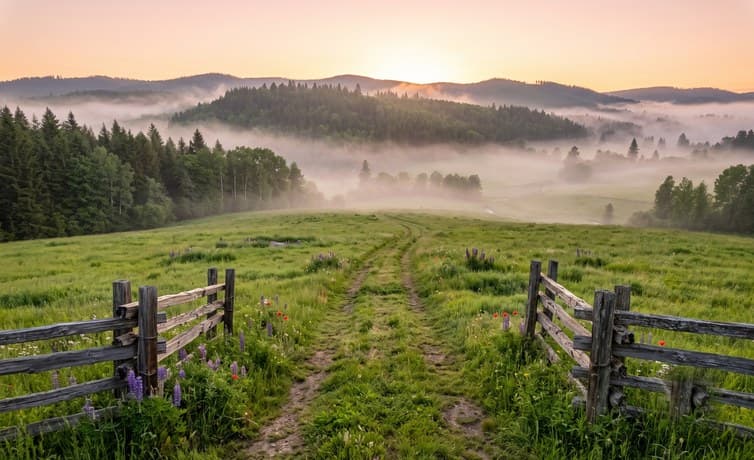
Tennessee has a way of getting under your skin. Whether it’s the mist rising off a creek bottom at dawn or the sight of white-tailed deer picking their way through a hardwood ridge, the Volunteer State offers something that’s getting harder to find everywhere else: a genuine connection to the land. If you’ve been dreaming of owning your own piece of Tennessee, you’re not alone. Rural land buyers from across the country are discovering what locals have always known — Tennessee is one of the best places in the South to buy affordable acreage.
This guide walks you through everything you need to know about buying rural land in Tennessee, from understanding the landscape and terrain to navigating financing options and county regulations.
Why Tennessee Is a Popular Destination for Rural Land Buyers
Tennessee’s appeal for land buyers comes down to a combination of factors that are hard to find together in one state. The geography is diverse — from the Great Smoky Mountains in the east to the rolling plateaus of the Highland Rim and the river bottoms of West Tennessee. That variety means different buyers can find what they’re looking for, whether it’s wooded acreage for hunting, open pasture for livestock, or remote mountain land for a cabin getaway.
On top of that, Tennessee has no state income tax, which keeps overall living costs lower than many neighboring states. Property taxes are among the lowest in the Southeast, making rural ownership more affordable over the long term. And with a strong tradition of outdoor culture — hunting, fishing, hiking, and camping — the state genuinely supports rural landowners.
Understanding Tennessee’s Terrain: What to Expect from the Land
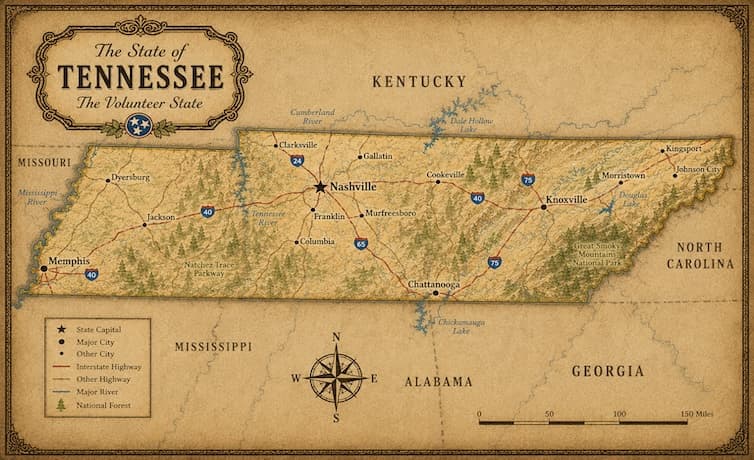
Tennessee stretches about 430 miles from east to west, and the land changes dramatically across that distance. Here’s a quick breakdown of the major regions:
- East Tennessee (Appalachian Mountains): Rugged mountain terrain with steep ridges, dense forests, and cold-water streams. Great for hunting, hiking, and off-grid living, but access and building can be challenging.
- Middle Tennessee (Highland Rim & Central Basin): Rolling hills, cedar glades, and fertile bottomland. Many hunters and recreational buyers target this region for deer, turkey, and small game.
- West Tennessee (Coastal Plain): Flatter, more agricultural land near the Mississippi River. Waterfowl hunting and farming are common uses.
For buyers looking at recreational or hunting land, Middle and East Tennessee are typically the most popular. Perry County, for example, sits on the Western Highland Rim and is known for exceptional whitetail deer populations, hardwood timber, and creek-bottom terrain that makes for outstanding wildlife habitat.
Hunting in Tennessee: What Landowners Need to Know
Owning hunting land in Tennessee puts you in control of your own outdoor experience. Unlike relying on public land access — where competition can be stiff and hunting pressure is high — your own acreage lets you manage habitat, control access, and hunt on your schedule.
Tennessee is managed by the Tennessee Wildlife Resources Agency (TWRA), which sets seasons and regulations for deer, turkey, bear, and small game. The state has both archery and firearm seasons, with generous bag limits compared to many northern states. Deer season typically runs from late September through early January, giving landowners a long window to enjoy their property.
Even a modest 5–10 acre parcel can hold deer if the habitat is right — especially if it connects to neighboring woodlands or agricultural fields. Creek bottoms, food plot clearings, and wooded ridges all play a role in creating quality deer habitat.
How Much Does Land Cost in Tennessee?
Land prices in Tennessee vary significantly by location and terrain. Mountain land in popular counties near Gatlinburg or the Smokies can command premium prices due to tourism and development pressure. But in rural counties further west — like Perry, Decatur, or Wayne — raw wooded land can be found at prices that make ownership genuinely accessible.
Expect to pay anywhere from $3,000 to $10,000 per acre for recreational land in Middle Tennessee, depending on road access, timber value, water features, and proximity to towns. Smaller tracts (5–10 acres) in desirable counties can still be found in the $30,000–$60,000 range for buyers willing to put in some research.
The key is knowing where to look. Companies like Classic Country Land specialize in finding and offering affordable rural tracts across Tennessee, with options that include in-house owner financing starting at just $999 down — no credit check required. That makes owning Tennessee acreage possible for buyers who might not qualify for a traditional land loan.
What to Look for When Buying Rural Land in Tennessee
Before making an offer on any parcel, there are a handful of things worth checking:
- Road access: Is there a paved road, gravel road, or only an easement? Access affects both usability and resale value.
- Water sources: Creeks, springs, and ponds are major assets for both wildlife and potential future use. Ask whether water features are perennial (year-round) or seasonal.
- Timber: Existing hardwood timber — oak, hickory, and poplar — adds value and creates wildlife habitat.
- Utilities: Power access, well potential, and septic suitability matter if you plan to build. Remote land may require off-grid solutions.
- Flood zones: Creek bottoms are beautiful but can carry flood risk. Check FEMA flood maps for any parcel near water.
- Neighboring land use: Knowing what’s around your parcel matters — whether it’s other timberland, national forest, or farmland.
Financing Rural Land in Tennessee Without a Bank
Here’s something many first-time land buyers don’t know: traditional banks are often reluctant to finance raw rural land. Unlike homes, which have clear collateral value, undeveloped land is seen as higher risk by lenders — and when banks do offer land loans, they typically require 20–50% down, solid credit, and extensive paperwork.
Owner financing sidesteps all of that. With seller-financed land, the company selling the property acts as the lender. You make monthly payments directly to them, often with no credit check, no bank involvement, and a much smaller down payment requirement. It’s a practical path to ownership that’s especially helpful for buyers who are self-employed, have limited credit history, or simply don’t want to deal with bank bureaucracy.
Ready to Find Your Tennessee Land?
Tennessee offers some of the best rural land value in the South — and with the right financing in place, owning your own piece of it is more achievable than most people think. Whether you’re after a hunting retreat, a homestead, or just a quiet place to get away from it all, there’s Tennessee acreage out there waiting for you.
Browse current Tennessee land listings at Classic Country Land or call us at 972-649-6200 to speak with a land specialist who can help match you with the right property for your goals and budget. Owner financing is available with just $999 down — no credit check required.
Tennessee has a way of getting under your skin. Whether it’s the mist rising off a creek bottom at dawn or the sight of white-tailed deer picking their way through a hardwood ridge, the Volunteer State offers something that’s getting harder to find everywhere else: a genuine connection to the land. If you’ve been dreaming of owning your own piece of Tennessee, you’re not alone. Rural land buyers from across the country are discovering what locals have always known — Tennessee is one of the best places in the South to buy affordable acreage.
This guide walks you through everything you need to know about buying rural land in Tennessee, from understanding the landscape and terrain to navigating financing options and county regulations.
Why Tennessee Is a Popular Destination for Rural Land Buyers
Tennessee’s appeal for land buyers comes down to a combination of factors that are hard to find together in one state. The geography is diverse — from the Great Smoky Mountains in the east to the rolling plateaus of the Highland Rim and the river bottoms of West Tennessee. That variety means different buyers can find what they’re looking for, whether it’s wooded acreage for hunting, open pasture for livestock, or remote mountain land for a cabin getaway.
On top of that, Tennessee has no state income tax, which keeps overall living costs lower than many neighboring states. Property taxes are among the lowest in the Southeast, making rural ownership more affordable over the long term. And with a strong tradition of outdoor culture — hunting, fishing, hiking, and camping — the state genuinely supports rural landowners.
Understanding Tennessee’s Terrain: What to Expect from the Land
Tennessee stretches about 430 miles from east to west, and the land changes dramatically across that distance. Here’s a quick breakdown of the major regions:
- East Tennessee (Appalachian Mountains): Rugged mountain terrain with steep ridges, dense forests, and cold-water streams. Great for hunting, hiking, and off-grid living, but access and building can be challenging.
- Middle Tennessee (Highland Rim & Central Basin): Rolling hills, cedar glades, and fertile bottomland. Many hunters and recreational buyers target this region for deer, turkey, and small game.
- West Tennessee (Coastal Plain): Flatter, more agricultural land near the Mississippi River. Waterfowl hunting and farming are common uses.
For buyers looking at recreational or hunting land, Middle and East Tennessee are typically the most popular. Perry County, for example, sits on the Western Highland Rim and is known for exceptional whitetail deer populations, hardwood timber, and creek-bottom terrain that makes for outstanding wildlife habitat.
Hunting in Tennessee: What Landowners Need to Know
Owning hunting land in Tennessee puts you in control of your own outdoor experience. Unlike relying on public land access — where competition can be stiff and hunting pressure is high — your own acreage lets you manage habitat, control access, and hunt on your schedule.
Tennessee is managed by the Tennessee Wildlife Resources Agency (TWRA), which sets seasons and regulations for deer, turkey, bear, and small game. The state has both archery and firearm seasons, with generous bag limits compared to many northern states. Deer season typically runs from late September through early January, giving landowners a long window to enjoy their property.
Even a modest 5–10 acre parcel can hold deer if the habitat is right — especially if it connects to neighboring woodlands or agricultural fields. Creek bottoms, food plot clearings, and wooded ridges all play a role in creating quality deer habitat.
How Much Does Land Cost in Tennessee?
Land prices in Tennessee vary significantly by location and terrain. Mountain land in popular counties near Gatlinburg or the Smokies can command premium prices due to tourism and development pressure. But in rural counties further west — like Perry, Decatur, or Wayne — raw wooded land can be found at prices that make ownership genuinely accessible.
Expect to pay anywhere from $3,000 to $10,000 per acre for recreational land in Middle Tennessee, depending on road access, timber value, water features, and proximity to towns. Smaller tracts (5–10 acres) in desirable counties can still be found in the $30,000–$60,000 range for buyers willing to put in some research.
The key is knowing where to look. Companies like Legacy Land specialize in finding and offering affordable rural tracts across Tennessee, with options that include in-house owner financing starting at just $999 down — no credit check required. That makes owning Tennessee acreage possible for buyers who might not qualify for a traditional land loan.
What to Look for When Buying Rural Land in Tennessee
Before making an offer on any parcel, there are a handful of things worth checking:
- Road access: Is there a paved road, gravel road, or only an easement? Access affects both usability and resale value.
- Water sources: Creeks, springs, and ponds are major assets for both wildlife and potential future use. Ask whether water features are perennial (year-round) or seasonal.
- Timber: Existing hardwood timber — oak, hickory, and poplar — adds value and creates wildlife habitat.
- Utilities: Power access, well potential, and septic suitability matter if you plan to build. Remote land may require off-grid solutions.
- Flood zones: Creek bottoms are beautiful but can carry flood risk. Check FEMA flood maps for any parcel near water.
- Neighboring land use: Knowing what’s around your parcel matters — whether it’s other timberland, national forest, or farmland.
Financing Rural Land in Tennessee Without a Bank
Here’s something many first-time land buyers don’t know: traditional banks are often reluctant to finance raw rural land. Unlike homes, which have clear collateral value, undeveloped land is seen as higher risk by lenders — and when banks do offer land loans, they typically require 20–50% down, solid credit, and extensive paperwork.
Owner financing sidesteps all of that. With seller-financed land, the company selling the property acts as the lender. You make monthly payments directly to them, often with no credit check, no bank involvement, and a much smaller down payment requirement. It’s a practical path to ownership that’s especially helpful for buyers who are self-employed, have limited credit history, or simply don’t want to deal with bank bureaucracy.
Ready to Find Your Tennessee Land?
Tennessee offers some of the best rural land value in the South — and with the right financing in place, owning your own piece of it is more achievable than most people think. Whether you’re after a hunting retreat, a homestead, or just a quiet place to get away from it all, there’s Tennessee acreage out there waiting for you.
Browse current Tennessee land listings at Legacy Land or call us at 972-649-6200 to speak with a land specialist who can help match you with the right property for your goals and budget. Owner financing is available with just $999 down — no credit check required.