
How Much Does It Cost to Fence Rural Land?
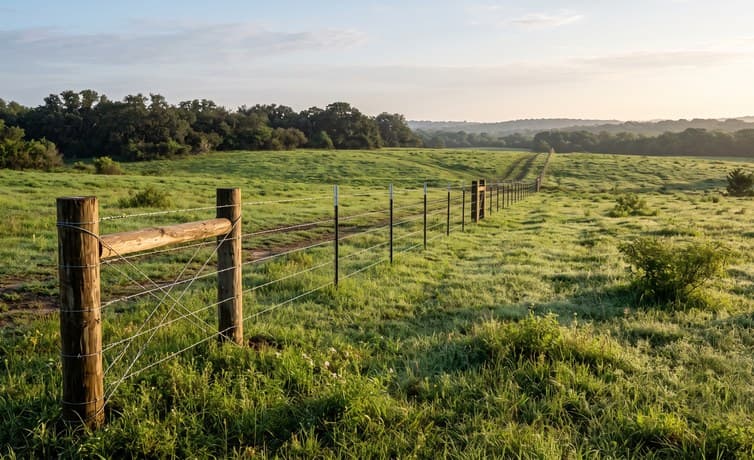
Ask a room full of rural landowners about their first big project and fencing comes up fast. A fence marks your boundary, keeps livestock in and trespassers honest, and makes a raw parcel feel like your place in a way few other improvements do.
It’s also a project where costs are wildly misunderstood. Fencing is priced by the linear foot, but land is sold by the acre — and the relationship between the two surprises almost everyone.
Here’s how the math actually works, what the common fence types cost in 2026, and how to fence smart without draining the land fund.
What Fence Types Cost in 2026
Installed prices vary by region, terrain, and materials, but current national figures give you a solid planning range:
- Barbed wire (3–5 strand) — roughly $3 to $6 per linear foot installed; the workhorse for cattle country and boundary marking.
- Woven wire / field fence — roughly $2 to $9 per linear foot installed depending on height and mesh; the choice for goats, sheep, dogs, and general containment.
- DIY materials only — a fraction of installed cost; wire itself is cheap, and T-posts keep per-foot spend low if you swing the driver yourself.
Labor is often half or more of an installed price, which is why so many landowners fence their own ground a weekend at a time.
The Per-Acre Math Everyone Gets Wrong
Here’s the counterintuitive part: the bigger your parcel, the cheaper fencing gets per acre. Perimeter doesn’t grow as fast as area.
- 1 acre (square) — about 835 feet of fence
- 5 acres — about 1,867 feet
- 10 acres — about 2,640 feet (a half mile)
- 40 acres — about 5,280 feet (a full mile — just a quarter mile per side)
Run the numbers with $4-per-foot barbed wire: fencing one acre costs about $3,300, or $3,300 per acre. Fencing 40 acres costs about $21,000 — but that’s only around $530 per acre. Same fence, same crew, one-sixth the per-acre cost.
The takeaway for buyers: a bigger parcel isn’t just more land for the money — it’s cheaper land to improve, foot for foot.
What Drives the Price Up (or Down)
Two identical-length fences can come in thousands of dollars apart. The variables that matter:
- Terrain — rocky ground, steep slopes, and creek crossings slow post-setting way down.
- Clearing — a fence line through brush or timber must be cleared first; budget for dozer or chainsaw time.
- Corners and gates — braced corner assemblies and gates are the expensive nodes of any fence; simple rectangles cost less than jagged boundaries.
- Post choice — steel T-posts are cheaper and faster than wood; most ag fences mix wood corners with T-post runs.
- Distance from town — remote parcels pay more for delivered materials and traveling crews.
How to Fence Smart on a Budget
You almost never need to fence everything at once — or at all:
- Start with priorities — fence the garden, the camp, or the livestock paddock first; the back forty can wait.
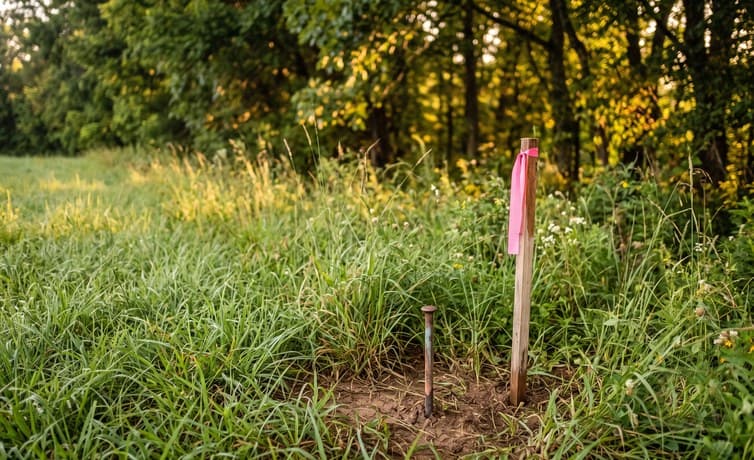
- Mark before you build — know your boundary (a survey helps) so you never pay to move a fence.
- Phase the project — a mile of fence built over four seasons costs the same in materials and much less in stress.
- Check the neighbor rule — many states have fence-sharing laws where adjoining livestock owners split boundary-fence costs.
- Match the fence to the job — three strands of barbed wire mark a boundary just fine; save the tall woven wire for where animals actually live.
And remember that a fence is a long-term asset, not an expense. A well-built barbed wire fence with treated posts commonly serves for decades with basic maintenance — a few hours each spring walking the line with a wire stretcher and a bag of staples. Spread over its working life, even a professionally installed fence costs surprisingly little per year, and it adds real, visible value if you ever sell the property.
Find Land Worth Fencing at Classic Country Land
The best fence projects start with the right parcel — honest acreage, known boundaries, and a price that leaves room in the budget for improvements. Classic Country Land has been helping people become landowners for more than 25 years, with mapped parcels across 14 states and in-house owner financing on every property. No banks, no credit or background checks.
Down payments start at just $999, with fixed monthly payments that leave money for T-posts and wire. Whether you want a few private acres or a full quarter-mile-per-side forty, there’s a property that fits.
Browse current listings at classiccountryland.com or call 972-649-6200. Get the land first — the fence can follow one weekend at a time.
Ask a room full of rural landowners about their first big project and fencing comes up fast. A fence marks your boundary, keeps livestock in and trespassers honest, and makes a raw parcel feel like your place in a way few other improvements do.
It’s also a project where costs are wildly misunderstood. Fencing is priced by the linear foot, but land is sold by the acre — and the relationship between the two surprises almost everyone.
Here’s how the math actually works, what the common fence types cost in 2026, and how to fence smart without draining the land fund.
What Fence Types Cost in 2026
Installed prices vary by region, terrain, and materials, but current national figures give you a solid planning range:
- Barbed wire (3–5 strand) — roughly $3 to $6 per linear foot installed; the workhorse for cattle country and boundary marking.
- Woven wire / field fence — roughly $2 to $9 per linear foot installed depending on height and mesh; the choice for goats, sheep, dogs, and general containment.
- DIY materials only — a fraction of installed cost; wire itself is cheap, and T-posts keep per-foot spend low if you swing the driver yourself.
Labor is often half or more of an installed price, which is why so many landowners fence their own ground a weekend at a time.
The Per-Acre Math Everyone Gets Wrong
Here’s the counterintuitive part: the bigger your parcel, the cheaper fencing gets per acre. Perimeter doesn’t grow as fast as area.
- 1 acre (square) — about 835 feet of fence
- 5 acres — about 1,867 feet
- 10 acres — about 2,640 feet (a half mile)
- 40 acres — about 5,280 feet (a full mile — just a quarter mile per side)
Run the numbers with $4-per-foot barbed wire: fencing one acre costs about $3,300, or $3,300 per acre. Fencing 40 acres costs about $21,000 — but that’s only around $530 per acre. Same fence, same crew, one-sixth the per-acre cost.
The takeaway for buyers: a bigger parcel isn’t just more land for the money — it’s cheaper land to improve, foot for foot.
What Drives the Price Up (or Down)
Two identical-length fences can come in thousands of dollars apart. The variables that matter:
- Terrain — rocky ground, steep slopes, and creek crossings slow post-setting way down.
- Clearing — a fence line through brush or timber must be cleared first; budget for dozer or chainsaw time.
- Corners and gates — braced corner assemblies and gates are the expensive nodes of any fence; simple rectangles cost less than jagged boundaries.
- Post choice — steel T-posts are cheaper and faster than wood; most ag fences mix wood corners with T-post runs.
- Distance from town — remote parcels pay more for delivered materials and traveling crews.
How to Fence Smart on a Budget
You almost never need to fence everything at once — or at all:
- Start with priorities — fence the garden, the camp, or the livestock paddock first; the back forty can wait.
- Mark before you build — know your boundary (a survey helps) so you never pay to move a fence.
- Phase the project — a mile of fence built over four seasons costs the same in materials and much less in stress.
- Check the neighbor rule — many states have fence-sharing laws where adjoining livestock owners split boundary-fence costs.
- Match the fence to the job — three strands of barbed wire mark a boundary just fine; save the tall woven wire for where animals actually live.
And remember that a fence is a long-term asset, not an expense. A well-built barbed wire fence with treated posts commonly serves for decades with basic maintenance — a few hours each spring walking the line with a wire stretcher and a bag of staples. Spread over its working life, even a professionally installed fence costs surprisingly little per year, and it adds real, visible value if you ever sell the property.
Find Land Worth Fencing at Legacy Land
The best fence projects start with the right parcel — honest acreage, known boundaries, and a price that leaves room in the budget for improvements. Legacy Land has been helping people become landowners for more than 25 years, with mapped parcels across 14 states and in-house owner financing on every property. No banks, no credit or background checks.
Down payments start at just $999, with fixed monthly payments that leave money for T-posts and wire. Whether you want a few private acres or a full quarter-mile-per-side forty, there’s a property that fits.
Browse current listings at classiccountryland.com or call 972-649-6200. Get the land first — the fence can follow one weekend at a time.