
Wyoming Land for Sale: A Buyer's Guide to the Cowboy State
Wyoming is the least populated state in the country, and you feel it about ten minutes outside any town. Fewer than 600,000 people across nearly 98,000 square miles produces something rare: land that is wide open and, in much of the state, genuinely affordable.
It's also a state where details matter more than usual. Water, access, elevation, and winter shape what a parcel can be used for far more than the acreage number does.
Here's what to look at before you buy in the Cowboy State.
Wyoming's Land Regions
The Eastern Plains
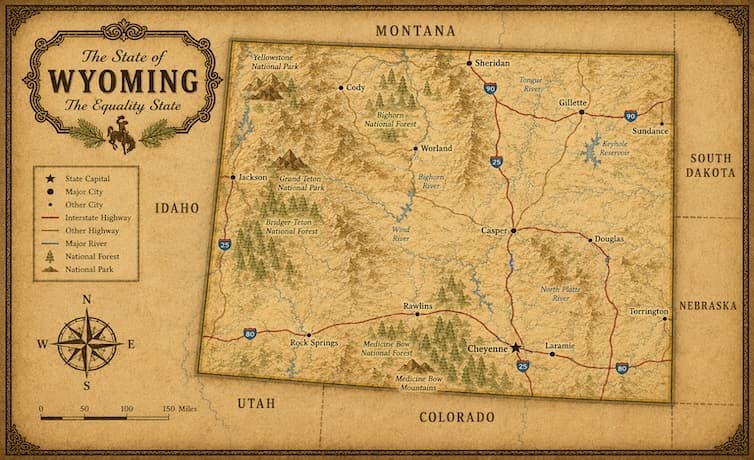
The eastern third — think Cheyenne north through Torrington and up toward Gillette — is high plains grassland and dryland farm country. This is the most affordable and most accessible part of the state, with easier winters and better road networks than the mountain west.
The Central Basins
The middle of the state is sage country: big open basins, antelope, and enormous views. Prices are low, precipitation is lower, and water is the whole conversation.
The Black Hills Edge
Northeast Wyoming climbs into ponderosa pine near the South Dakota line. More trees, more deer, and a different feel entirely from the plains an hour south.
The Mountain West
The Tetons, the Winds, and the Big Horns are spectacular and priced accordingly. Mountain and Teton-area land can run from $10,000 to $50,000 an acre or more, so most affordable-land buyers look east.
What Wyoming Land Costs
Wyoming is consistently one of the cheapest states in the country per acre, but the spread is enormous.
- Rural recreational and residential land commonly runs in the range of roughly $1,000 to $3,500 per acre in 2026, outside premium mountain markets.
- Remote large parcels in the basins can come in far below that on a per-acre basis.
- Agricultural ground anchors higher — U.S. pasture averaged about $1,920 per acre in 2025, while irrigated and benchmark farm ground in the region runs several thousand dollars an acre.
What actually moves the price:
- Water — a well, a spring, a creek, or deeded water rights.
- Legal, year-round access on a maintained road.
- Power at or near the property line.
- Elevation and snow load, which decide whether a place is a summer camp or a home.
- Adjoining public land, which raises value for recreational buyers.
The Wyoming-Specific Checks
Water Rights
Wyoming follows prior appropriation — water rights are separate from land ownership and are administered by the State Engineer's Office by priority date. A creek running through your parcel does not automatically mean you may divert from it. If water use matters to your plans, verify the right in writing before closing.
Split Estate and Mineral Rights
Severed mineral rights are common across Wyoming. Confirm what conveys, and understand that in a split estate the mineral owner generally has the right to reasonable surface access.
Access, Not Just a Line on a Map
Many parcels reach the highway across other private ground or across state trust land. A recorded easement is what you want. A "we've always driven through" arrangement is not.
Checkerboard Country and Corner Crossing
Southern Wyoming's rail-era checkerboard puts alternating public and private sections against each other. The Tenth Circuit's 2025 Iron Bar Holdings decision upheld corner crossing in Wyoming and the rest of the circuit, though the state legislature declined to codify it in 2026. Know the map before you count on it.
Winter
Ask how the road is maintained between December and March, and whether the county plows it. In much of Wyoming, the honest answer is that you plan around being snowed in occasionally. Wind matters as much as snow — an exposed ridge that looks perfect in July can drift a driveway shut in a single night, and locals will tell you which side of a draw to build on if you ask.
Wells and Water Supply
Domestic wells are permitted through the State Engineer's Office, and depth to water varies enormously between basins and foothills. Neighbors are the best source of real numbers — ask what they drilled to and what it cost.
Who Buys Wyoming Land
- Hunters after elk, antelope, mule deer, and access to enormous public tracts.
- Off-grid builders drawn to low population density and light regulation.
- Investors buying acreage cheaply and holding it.
- Retreat buyers who want a place with no neighbors in sight.
- Ranch expansion buyers adding grazing ground.
Buy Wyoming Acreage the Simple Way — Classic Country Land
Big open land shouldn't require a bank's permission. Classic Country Land has spent more than 25 years selling rural property with in-house owner financing — no credit check, no background check, and a straightforward agreement.
Down payments start at just $999, with a one-time $249 document fee at closing and fixed monthly payments after that. We sell land in 20+ states, and our properties carry only light covenants meant to keep an adjoining owner from trashing and devaluing the neighborhood, so you keep the freedom to camp, hunt, build, or live off grid.
See what's available at classiccountryland.com or call 972-649-6200.
What you pay upfront: $999 down, plus a one-time $249 document fee at closing.
Financing disclosure: Basic-plan payments shown assume $999 down at 10.99% APR, amortized over terms up to 20 years — some contracts include a balloon payment, typically due after three years, when the remaining balance is refinanced or paid. Rates, discounts, and terms are subject to adjustment without notice.
Wyoming is the least populated state in the country, and you feel it about ten minutes outside any town. Fewer than 600,000 people across nearly 98,000 square miles produces something rare: land that is wide open and, in much of the state, genuinely affordable.
It's also a state where details matter more than usual. Water, access, elevation, and winter shape what a parcel can be used for far more than the acreage number does.
Here's what to look at before you buy in the Cowboy State.
Wyoming's Land Regions
The Eastern Plains
The eastern third — think Cheyenne north through Torrington and up toward Gillette — is high plains grassland and dryland farm country. This is the most affordable and most accessible part of the state, with easier winters and better road networks than the mountain west.
The Central Basins
The middle of the state is sage country: big open basins, antelope, and enormous views. Prices are low, precipitation is lower, and water is the whole conversation.
The Black Hills Edge
Northeast Wyoming climbs into ponderosa pine near the South Dakota line. More trees, more deer, and a different feel entirely from the plains an hour south.
The Mountain West
The Tetons, the Winds, and the Big Horns are spectacular and priced accordingly. Mountain and Teton-area land can run from $10,000 to $50,000 an acre or more, so most affordable-land buyers look east.
What Wyoming Land Costs
Wyoming is consistently one of the cheapest states in the country per acre, but the spread is enormous.
- Rural recreational and residential land commonly runs in the range of roughly $1,000 to $3,500 per acre in 2026, outside premium mountain markets.
- Remote large parcels in the basins can come in far below that on a per-acre basis.
- Agricultural ground anchors higher — U.S. pasture averaged about $1,920 per acre in 2025, while irrigated and benchmark farm ground in the region runs several thousand dollars an acre.
What actually moves the price:
- Water — a well, a spring, a creek, or deeded water rights.
- Legal, year-round access on a maintained road.
- Power at or near the property line.
- Elevation and snow load, which decide whether a place is a summer camp or a home.
- Adjoining public land, which raises value for recreational buyers.
The Wyoming-Specific Checks
Water Rights
Wyoming follows prior appropriation — water rights are separate from land ownership and are administered by the State Engineer's Office by priority date. A creek running through your parcel does not automatically mean you may divert from it. If water use matters to your plans, verify the right in writing before closing.
Split Estate and Mineral Rights
Severed mineral rights are common across Wyoming. Confirm what conveys, and understand that in a split estate the mineral owner generally has the right to reasonable surface access.
Access, Not Just a Line on a Map
Many parcels reach the highway across other private ground or across state trust land. A recorded easement is what you want. A "we've always driven through" arrangement is not.
Checkerboard Country and Corner Crossing
Southern Wyoming's rail-era checkerboard puts alternating public and private sections against each other. The Tenth Circuit's 2025 Iron Bar Holdings decision upheld corner crossing in Wyoming and the rest of the circuit, though the state legislature declined to codify it in 2026. Know the map before you count on it.
Winter
Ask how the road is maintained between December and March, and whether the county plows it. In much of Wyoming, the honest answer is that you plan around being snowed in occasionally. Wind matters as much as snow — an exposed ridge that looks perfect in July can drift a driveway shut in a single night, and locals will tell you which side of a draw to build on if you ask.
Wells and Water Supply
Domestic wells are permitted through the State Engineer's Office, and depth to water varies enormously between basins and foothills. Neighbors are the best source of real numbers — ask what they drilled to and what it cost.
Who Buys Wyoming Land
- Hunters after elk, antelope, mule deer, and access to enormous public tracts.
- Off-grid builders drawn to low population density and light regulation.
- Investors buying acreage cheaply and holding it.
- Retreat buyers who want a place with no neighbors in sight.
- Ranch expansion buyers adding grazing ground.
Buy Wyoming Acreage the Simple Way — Legacy Land
Big open land shouldn't require a bank's permission. Legacy Land has spent more than 25 years selling rural property with in-house owner financing — no credit check, no background check, and a straightforward agreement.
Down payments start at just $999, with a one-time $249 document fee at closing and fixed monthly payments after that. We sell land in 20+ states, and our properties carry only light covenants meant to keep an adjoining owner from trashing and devaluing the neighborhood, so you keep the freedom to camp, hunt, build, or live off grid.
See what's available at classiccountryland.com or call 972-649-6200.
What you pay upfront: $999 down, plus a one-time $249 document fee at closing.
Financing disclosure: Basic-plan payments shown assume $999 down at 10.99% APR, amortized over terms up to 20 years — some contracts include a balloon payment, typically due after three years, when the remaining balance is refinanced or paid. Rates, discounts, and terms are subject to adjustment without notice.