Florida Land for Sale: A Buyer's Guide to the Sunshine State
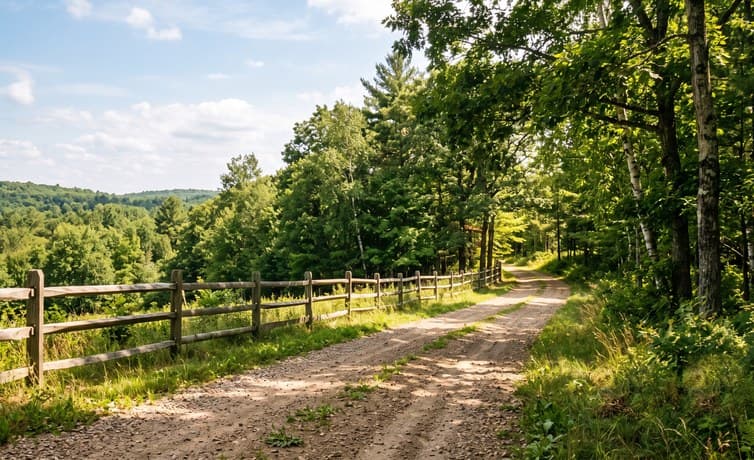
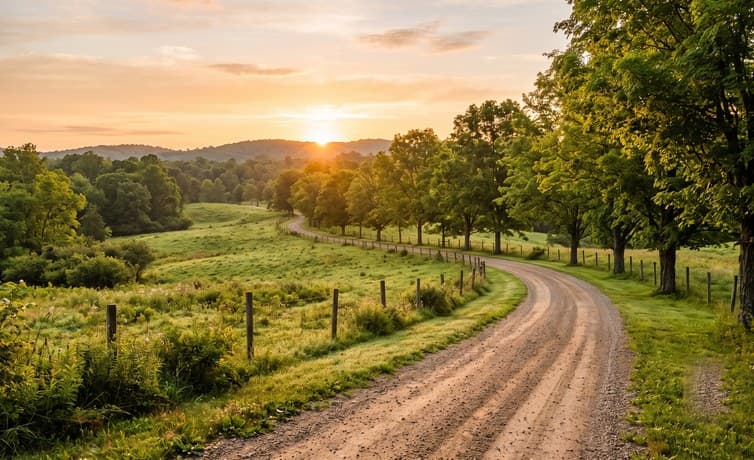
Most people picture Florida as coastline. Spend a day driving the middle of the state and you'll find something else entirely: pine flatwoods, cattle pasture, oak hammocks, and long stretches of two-lane road where the nearest traffic light is twenty minutes away.
That inland Florida is where affordable land still exists. It's also where the buying rules are a little different than they are in most states, because in Florida water is never far from the conversation.
Here's what to know before you buy acreage in the Sunshine State.
Florida's Land Regions at a Glance
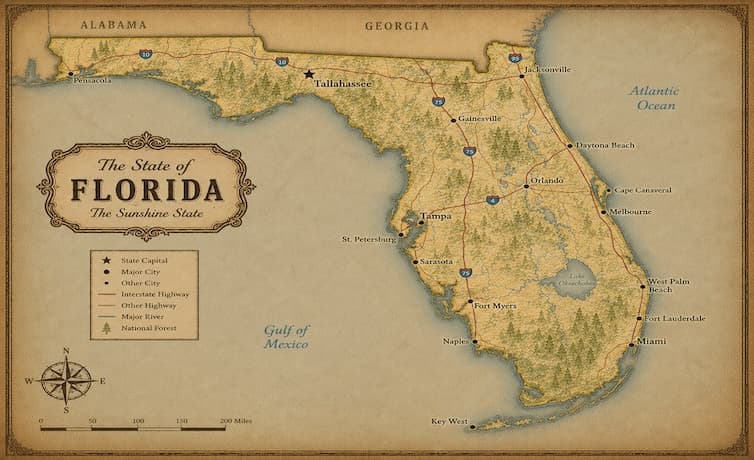
The Panhandle
The northwest corner is the most affordable part of the state and the most like the Deep South. Rolling pine timberland, hardwood creek bottoms, real seasons, and strong deer and turkey hunting. Rural Panhandle counties routinely offer the lowest per-acre prices in Florida.
North Central Florida
Between Gainesville and the Georgia line you get horse country, springs, sandy uplands, and small farm towns. It's a popular middle ground for homesteaders who want reasonable prices without being six hours from a city.
Central Florida and the Heartland
South of Orlando the state opens into ranch country — cattle, citrus, and big flat parcels. Prices climb as you move toward the I-4 corridor and fall as you move away from it.
South Florida
Land here is priced by development pressure, not by acreage. Unless you're buying for a specific reason, most rural land buyers look north.
What Florida Land Actually Costs
Statewide averages are close to useless in Florida, because a coastal acre and a Panhandle acre are barely the same product. The useful anchors are agricultural values: USDA's most recent land values summary put Florida farm real estate around $8,700 per acre, cropland near $10,550, and pasture near $7,400.
Rural residential and recreational tracts inland run well below the statewide "all land" average, and the most affordable rural Panhandle and north-central counties come in dramatically lower than anything near a coast.
A few things move Florida prices more than acreage does:
- Distance from a coast or a metro — the single biggest factor.
- Upland versus wetland acreage — usable dry ground is what you're really paying for.
- Paved road frontage versus a dirt easement.
- Existing well, power, or septic on the parcel.
- Agricultural classification, which can substantially lower the annual tax bill on qualifying land.
The Florida-Specific Checks
Wetlands and Water Table
Florida's water table sits high in much of the state. A parcel can look bone dry in April and hold standing water in September. Ask when the seller last saw the land in the wet season, look for cypress domes and water-stained trunks, and check the county GIS for mapped wetlands before you plan a homesite.
Flood Zones
Pull the parcel on FEMA's free flood map viewer at msc.fema.gov. Flood zone doesn't mean unbuildable — it means you build on the high ground and plan accordingly.
Septic and Soils
Sandy Florida soils often perc beautifully, but high groundwater can still complicate a conventional septic system. County health department rules vary, and a mounded system costs more than a standard one. Ask before you assume.
Access and Easements
Plenty of rural Florida parcels reach the road through a recorded easement rather than direct frontage. That's normal and fine — as long as the easement is recorded and in writing. A handshake with the current neighbor doesn't transfer to the next one.
Wildlife and Timber
Much of inland Florida is working pine timberland, and stands get harvested on a cycle. Ask when the parcel was last cut and what the replanting looks like, because a tract clear-cut two years ago and a tract with 25-year-old pines are very different properties at the same price per acre.
Who Buys Land in Florida
Florida acreage attracts a wide mix, and the right parcel depends on which of these you are:
- Hunters chasing deer, turkey, and hogs, especially in the Panhandle and north central pine country.
- Homesteaders who want a long growing season and mild winters.
- RV and camping owners looking for a warm-weather base for part of the year.
- Retirees trading a suburban lot for acreage and quiet.
- Investors watching a state that keeps gaining population.
Buy Florida Land the Simple Way with Classic Country Land
Florida land is worth the extra homework, and it's worth buying without a bank in the middle of it. Classic Country Land has spent more than 25 years selling rural property with in-house owner financing, which means no credit check and no background check — your down payment and a signed agreement are what open the door.
Down payments start at just $999, with a one-time $249 document fee at closing, and monthly payments are fixed so you always know the number. We sell property across 20+ states, so if a Florida tract isn't quite the fit, there's a good chance the right parcel is a state or two away.
Browse current listings at classiccountryland.com or call 972-649-6200 and talk to a real person about what you're looking for.
What you pay upfront: $999 down, plus a one-time $249 document fee at closing.
Financing disclosure: Basic-plan payments shown assume $999 down at 10.99% APR, amortized over terms up to 20 years — some contracts include a balloon payment, typically due after three years, when the remaining balance is refinanced or paid. Rates, discounts, and terms are subject to adjustment without notice.
Most people picture Florida as coastline. Spend a day driving the middle of the state and you'll find something else entirely: pine flatwoods, cattle pasture, oak hammocks, and long stretches of two-lane road where the nearest traffic light is twenty minutes away.
That inland Florida is where affordable land still exists. It's also where the buying rules are a little different than they are in most states, because in Florida water is never far from the conversation.
Here's what to know before you buy acreage in the Sunshine State.
Florida's Land Regions at a Glance
The Panhandle
The northwest corner is the most affordable part of the state and the most like the Deep South. Rolling pine timberland, hardwood creek bottoms, real seasons, and strong deer and turkey hunting. Rural Panhandle counties routinely offer the lowest per-acre prices in Florida.
North Central Florida
Between Gainesville and the Georgia line you get horse country, springs, sandy uplands, and small farm towns. It's a popular middle ground for homesteaders who want reasonable prices without being six hours from a city.
Central Florida and the Heartland
South of Orlando the state opens into ranch country — cattle, citrus, and big flat parcels. Prices climb as you move toward the I-4 corridor and fall as you move away from it.
South Florida
Land here is priced by development pressure, not by acreage. Unless you're buying for a specific reason, most rural land buyers look north.
What Florida Land Actually Costs
Statewide averages are close to useless in Florida, because a coastal acre and a Panhandle acre are barely the same product. The useful anchors are agricultural values: USDA's most recent land values summary put Florida farm real estate around $8,700 per acre, cropland near $10,550, and pasture near $7,400.
Rural residential and recreational tracts inland run well below the statewide "all land" average, and the most affordable rural Panhandle and north-central counties come in dramatically lower than anything near a coast.
A few things move Florida prices more than acreage does:
- Distance from a coast or a metro — the single biggest factor.
- Upland versus wetland acreage — usable dry ground is what you're really paying for.
- Paved road frontage versus a dirt easement.
- Existing well, power, or septic on the parcel.
- Agricultural classification, which can substantially lower the annual tax bill on qualifying land.
The Florida-Specific Checks
Wetlands and Water Table
Florida's water table sits high in much of the state. A parcel can look bone dry in April and hold standing water in September. Ask when the seller last saw the land in the wet season, look for cypress domes and water-stained trunks, and check the county GIS for mapped wetlands before you plan a homesite.
Flood Zones
Pull the parcel on FEMA's free flood map viewer at msc.fema.gov. Flood zone doesn't mean unbuildable — it means you build on the high ground and plan accordingly.
Septic and Soils
Sandy Florida soils often perc beautifully, but high groundwater can still complicate a conventional septic system. County health department rules vary, and a mounded system costs more than a standard one. Ask before you assume.
Access and Easements
Plenty of rural Florida parcels reach the road through a recorded easement rather than direct frontage. That's normal and fine — as long as the easement is recorded and in writing. A handshake with the current neighbor doesn't transfer to the next one.
Wildlife and Timber
Much of inland Florida is working pine timberland, and stands get harvested on a cycle. Ask when the parcel was last cut and what the replanting looks like, because a tract clear-cut two years ago and a tract with 25-year-old pines are very different properties at the same price per acre.
Who Buys Land in Florida
Florida acreage attracts a wide mix, and the right parcel depends on which of these you are:
- Hunters chasing deer, turkey, and hogs, especially in the Panhandle and north central pine country.
- Homesteaders who want a long growing season and mild winters.
- RV and camping owners looking for a warm-weather base for part of the year.
- Retirees trading a suburban lot for acreage and quiet.
- Investors watching a state that keeps gaining population.
Buy Florida Land the Simple Way with Legacy Land
Florida land is worth the extra homework, and it's worth buying without a bank in the middle of it. Legacy Land has spent more than 25 years selling rural property with in-house owner financing, which means no credit check and no background check — your down payment and a signed agreement are what open the door.
Down payments start at just $999, with a one-time $249 document fee at closing, and monthly payments are fixed so you always know the number. We sell property across 20+ states, so if a Florida tract isn't quite the fit, there's a good chance the right parcel is a state or two away.
Browse current listings at classiccountryland.com or call 972-649-6200 and talk to a real person about what you're looking for.
What you pay upfront: $999 down, plus a one-time $249 document fee at closing.
Financing disclosure: Basic-plan payments shown assume $999 down at 10.99% APR, amortized over terms up to 20 years — some contracts include a balloon payment, typically due after three years, when the remaining balance is refinanced or paid. Rates, discounts, and terms are subject to adjustment without notice.