Land Loans vs. Owner Financing: Which Is Better for Buying Rural Land?
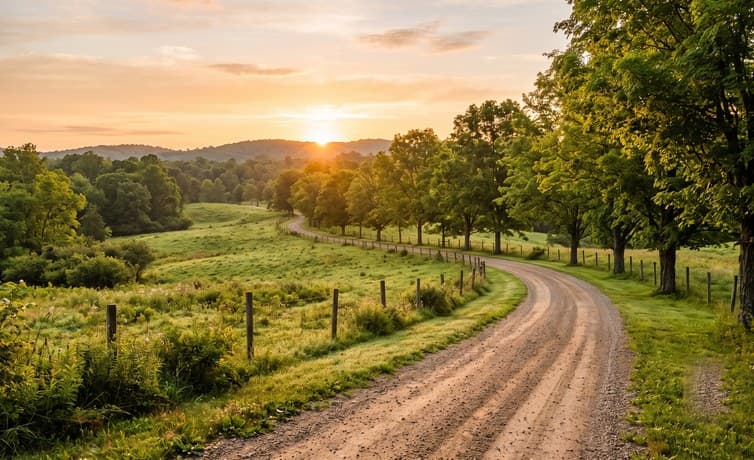
You've found the perfect piece of ground. Now comes the question that stops many buyers cold: how do you actually pay for it? Unless you're writing a check for the full price, you have two main paths — a land loan from a bank or credit union, or owner financing directly from the seller.
The two options work very differently, and the right choice depends on your credit, your timeline, and the kind of land you're buying. Here's an honest comparison so you can decide with clear eyes.
How a Bank Land Loan Works
A land loan is a mortgage-style loan secured by vacant land. Because there's no house serving as collateral, lenders consider raw land riskier than a home — and they price and structure loans accordingly. Expect:
- Down payments of 20 to 50 percent, with raw, unimproved land at the high end
- Interest rates typically 1 to 2 points above home mortgage rates
- Shorter terms, often 5 to 15 years instead of 30
- A full underwriting process: credit checks, income verification, and usually an appraisal and survey
Many national banks don't offer raw land loans at all. Local banks and farm credit lenders in rural areas are usually the best bet, but approval still hinges on strong credit and documented income.
How Owner Financing Works
With owner financing, the seller acts as the lender. You make a down payment, sign a contract — commonly a contract for deed or a note with a deed of trust — and pay fixed monthly installments directly to the seller until the balance is paid.
Because no bank is involved, the process is dramatically simpler:
- Down payments can be a few hundred to a few thousand dollars
- No credit check or income documentation with many land sellers
- Closing can happen in days rather than weeks
- Terms are set by agreement, not by underwriting formulas
Comparing the Two, Point by Point
Qualification
Banks approve borrowers; owner financing approves almost anyone willing to make the payments. If your credit is bruised, you're self-employed, or you simply don't want a hard inquiry on your file, owner financing is the practical path.
Upfront Cash
A $40,000 tract might require $8,000 to $20,000 down at a bank, plus closing costs. The same purchase with owner financing might start with a down payment under $1,000. For buyers who'd rather keep cash for a well, driveway, or camper, that difference matters.
Speed
Bank land loans routinely take 30 to 60 days to close. Owner-financed purchases can close as soon as the paperwork is signed — some buyers pick a property online and are making payments the same week.
Cost Over Time
Bank rates can be lower for well-qualified borrowers, so if you have excellent credit, significant cash, and time, a bank loan may cost less over the full term. Owner financing trades some interest cost for accessibility, speed, and flexibility — and most contracts allow early payoff without penalty, so you can shorten the term whenever your budget allows.
Paperwork and Protections
Bank loans come with standardized documents and consumer protections built into the mortgage process. Owner financing paperwork varies more, so read it. A good contract states the price, interest rate, payment schedule, and exactly when and how the deed transfers. Established land companies use consistent, plain-language contracts refined over thousands of sales; that track record is worth weighing when you choose who to buy from. Whichever route you take, keep copies of everything and make payments in a way that leaves a record.
Which One Is Right for You?
A bank land loan can make sense if you have strong credit, a large down payment, and you're buying higher-priced land a lender is comfortable with. Owner financing is usually the better fit if:
- You want a low down payment and fixed, predictable monthly installments
- Your credit history is imperfect or thin
- You want to close quickly and start using the land now
- The tract is rural or raw land that banks hesitate to touch
There's no single right answer — but for most everyday buyers purchasing affordable rural acreage, owner financing removes the roadblocks that keep land ownership out of reach.
One more practical note: the two paths aren't mutually exclusive forever. Some buyers start with owner financing to secure a property quickly, then refinance with a local bank later once the land has a well, driveway, or structure that makes lenders comfortable. Starting simple doesn't lock you in.
Buy Land the Simple Way with Classic Country Land
Classic Country Land has offered in-house owner financing for more than 25 years. There's no credit or background check, no banks, and no hassle — just down payments as low as $999 and straightforward monthly payments on rural land across 20-plus states. Browse properties at classiccountryland.com or call 972-649-6200 and start your path to ownership today.
What you pay upfront: $999 down, plus a one-time $249 document fee at closing.
Financing disclosure: Basic-plan payments shown assume $999 down at 10.99% APR, amortized over terms up to 20 years — some contracts include a balloon payment, typically due after three years, when the remaining balance is refinanced or paid. Rates, discounts, and terms are subject to adjustment without notice.
You've found the perfect piece of ground. Now comes the question that stops many buyers cold: how do you actually pay for it? Unless you're writing a check for the full price, you have two main paths — a land loan from a bank or credit union, or owner financing directly from the seller.
The two options work very differently, and the right choice depends on your credit, your timeline, and the kind of land you're buying. Here's an honest comparison so you can decide with clear eyes.
How a Bank Land Loan Works
A land loan is a mortgage-style loan secured by vacant land. Because there's no house serving as collateral, lenders consider raw land riskier than a home — and they price and structure loans accordingly. Expect:
- Down payments of 20 to 50 percent, with raw, unimproved land at the high end
- Interest rates typically 1 to 2 points above home mortgage rates
- Shorter terms, often 5 to 15 years instead of 30
- A full underwriting process: credit checks, income verification, and usually an appraisal and survey
Many national banks don't offer raw land loans at all. Local banks and farm credit lenders in rural areas are usually the best bet, but approval still hinges on strong credit and documented income.
How Owner Financing Works
With owner financing, the seller acts as the lender. You make a down payment, sign a contract — commonly a contract for deed or a note with a deed of trust — and pay fixed monthly installments directly to the seller until the balance is paid.
Because no bank is involved, the process is dramatically simpler:
- Down payments can be a few hundred to a few thousand dollars
- No credit check or income documentation with many land sellers
- Closing can happen in days rather than weeks
- Terms are set by agreement, not by underwriting formulas
Comparing the Two, Point by Point
Qualification
Banks approve borrowers; owner financing approves almost anyone willing to make the payments. If your credit is bruised, you're self-employed, or you simply don't want a hard inquiry on your file, owner financing is the practical path.
Upfront Cash
A $40,000 tract might require $8,000 to $20,000 down at a bank, plus closing costs. The same purchase with owner financing might start with a down payment under $1,000. For buyers who'd rather keep cash for a well, driveway, or camper, that difference matters.
Speed
Bank land loans routinely take 30 to 60 days to close. Owner-financed purchases can close as soon as the paperwork is signed — some buyers pick a property online and are making payments the same week.
Cost Over Time
Bank rates can be lower for well-qualified borrowers, so if you have excellent credit, significant cash, and time, a bank loan may cost less over the full term. Owner financing trades some interest cost for accessibility, speed, and flexibility — and most contracts allow early payoff without penalty, so you can shorten the term whenever your budget allows.
Paperwork and Protections
Bank loans come with standardized documents and consumer protections built into the mortgage process. Owner financing paperwork varies more, so read it. A good contract states the price, interest rate, payment schedule, and exactly when and how the deed transfers. Established land companies use consistent, plain-language contracts refined over thousands of sales; that track record is worth weighing when you choose who to buy from. Whichever route you take, keep copies of everything and make payments in a way that leaves a record.
Which One Is Right for You?
A bank land loan can make sense if you have strong credit, a large down payment, and you're buying higher-priced land a lender is comfortable with. Owner financing is usually the better fit if:
- You want a low down payment and fixed, predictable monthly installments
- Your credit history is imperfect or thin
- You want to close quickly and start using the land now
- The tract is rural or raw land that banks hesitate to touch
There's no single right answer — but for most everyday buyers purchasing affordable rural acreage, owner financing removes the roadblocks that keep land ownership out of reach.
One more practical note: the two paths aren't mutually exclusive forever. Some buyers start with owner financing to secure a property quickly, then refinance with a local bank later once the land has a well, driveway, or structure that makes lenders comfortable. Starting simple doesn't lock you in.
Buy Land the Simple Way with Legacy Land
Legacy Land has offered in-house owner financing for more than 25 years. There's no credit or background check, no banks, and no hassle — just down payments as low as $999 and straightforward monthly payments on rural land across 20-plus states. Browse properties at classiccountryland.com or call 972-649-6200 and start your path to ownership today.
What you pay upfront: $999 down, plus a one-time $249 document fee at closing.
Financing disclosure: Basic-plan payments shown assume $999 down at 10.99% APR, amortized over terms up to 20 years — some contracts include a balloon payment, typically due after three years, when the remaining balance is refinanced or paid. Rates, discounts, and terms are subject to adjustment without notice.