
Buying Land Next to Public Land: What to Know Before You Buy
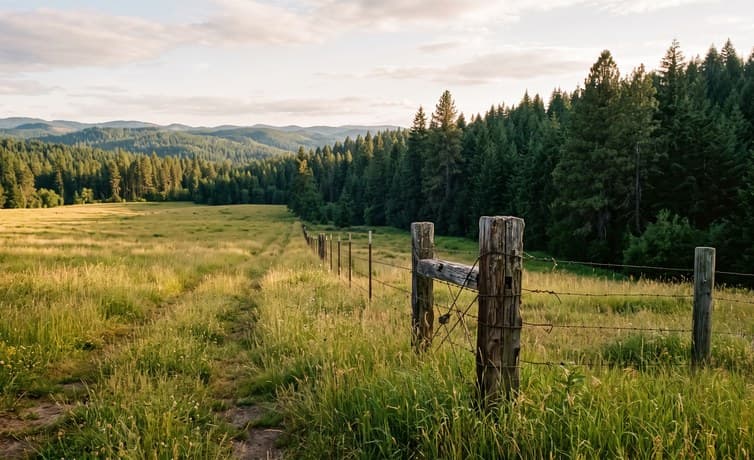
"Borders national forest" is one of the most powerful phrases in a land listing. It suggests a small parcel that lives much larger — thousands of acres of hunting, hiking, and quiet you'll never have to pay taxes on.
Often that's exactly what it is. Sometimes it isn't, and the difference comes down to a few things most buyers never think to check.
Here's how to evaluate a parcel that touches public ground.
What Adjoining Public Land Actually Gets You
Room to Roam
A 10-acre tract against a national forest boundary functions like a much bigger property for anything you'd do on foot. You get the walking, the scenery, and the wildlife without the price or the tax bill.
Better Wildlife
Big unbroken blocks of public timber hold game and move it. Private parcels along the edge often sit on travel corridors between bedding cover and food, which is why hunters pay a premium for boundary tracts.
A Neighbor That Never Changes
Nobody subdivides the national forest. One side of your property is permanently protected from development, which is worth real money at resale.
Views That Stay
If your view is across public ground, it stays your view.
The Catches Worth Checking
Adjoining isn't the same as accessible, and public isn't the same as unrestricted. Work through these before you make an offer.
- Can you legally step onto it? A shared boundary line gives you access along its length, but a parcel that only touches public land at a single corner is a different story. Corner crossing was upheld by the Tenth Circuit in the 2025 Iron Bar Holdings decision, which covers Wyoming, Colorado, Utah, New Mexico, Kansas, and Oklahoma. Outside that circuit the question is still unsettled — don't buy a parcel on the assumption that a corner is a doorway.
- Which agency, and what are its rules? National forest, BLM, state wildlife area, and state trust land all have different rules on hunting, camping, motor vehicles, and dogs. Look up the specific unit rather than assuming.
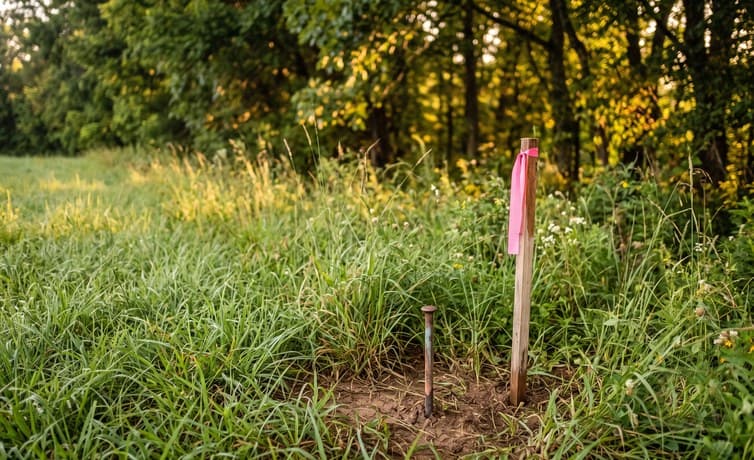
- Is the boundary where you think it is? Public land lines are surveyed lines, not fence lines. Old fences wander. A current survey tells you where you can build and where you'd be trespassing.
- Who else is out there? Popular public units bring hunters, target shooters, and ATVs during peak seasons. That's fine if you expect it and jarring if you don't.
- Fire and management activity. Prescribed burns, logging operations, and road closures are normal parts of managed public land. Ask the local ranger district what's planned nearby.
- Can you close off your own boundary? You'll likely want your line marked and posted, both to keep public users out of your camp and to keep your own use clearly on your side.
How to Verify a Public-Land Boundary Before You Buy
You can do most of this from a laptop in an evening.
- Pull the county GIS parcel viewer and find the tract. Public ownership is usually shaded and labeled.
- Cross-check with a mapping app that carries public-land layers, then confirm against the agency's own motor vehicle use map.
- Read the deed's legal description and compare it to the mapped line.
- Call the local ranger district or field office. They'll tell you about access roads, seasonal closures, and whether there's a right-of-way issue on that boundary.
- Walk the line with the survey in hand before closing if you can.
A Note on Access Roads
Some of the best boundary parcels are reached by a forest service road. Ask two questions: is the road maintained year-round, and is it open to public vehicle traffic in every season? A road that gates in winter changes what the property is.
Is It Worth the Premium?
Boundary tracts usually cost more per acre than similar land a mile away. Whether that's worth it depends on your use.
If you hunt, hike, ride, or camp, the premium tends to pay for itself in usable ground — you're buying a small parcel and borrowing a large one. If you're mainly after privacy or a homesite, land a short drive from the public boundary often gives you most of the benefit for less money, with fewer people at your fence line during hunting season.
Find Your Piece of the Country with Classic Country Land
Classic Country Land has spent more than 25 years helping people buy rural property, including plenty of parcels near public ground, and we describe what a property actually offers rather than what sounds best in a headline.
Every listing comes with in-house owner financing: no credit check, no background check, down payments starting at just $999 plus a one-time $249 document fee at closing, and fixed monthly payments. Our properties carry only light covenants — the kind that keep a neighbor from parking junk vehicles against your line — so you keep the freedom to camp, hunt, build, or go off grid while your investment stays protected. We have land in 20+ states.
See what's available at classiccountryland.com or call 972-649-6200.
What you pay upfront: $999 down, plus a one-time $249 document fee at closing.
Financing disclosure: Basic-plan payments shown assume $999 down at 10.99% APR, amortized over terms up to 20 years — some contracts include a balloon payment, typically due after three years, when the remaining balance is refinanced or paid. Rates, discounts, and terms are subject to adjustment without notice.
"Borders national forest" is one of the most powerful phrases in a land listing. It suggests a small parcel that lives much larger — thousands of acres of hunting, hiking, and quiet you'll never have to pay taxes on.
Often that's exactly what it is. Sometimes it isn't, and the difference comes down to a few things most buyers never think to check.
Here's how to evaluate a parcel that touches public ground.
What Adjoining Public Land Actually Gets You
Room to Roam
A 10-acre tract against a national forest boundary functions like a much bigger property for anything you'd do on foot. You get the walking, the scenery, and the wildlife without the price or the tax bill.
Better Wildlife
Big unbroken blocks of public timber hold game and move it. Private parcels along the edge often sit on travel corridors between bedding cover and food, which is why hunters pay a premium for boundary tracts.
A Neighbor That Never Changes
Nobody subdivides the national forest. One side of your property is permanently protected from development, which is worth real money at resale.
Views That Stay
If your view is across public ground, it stays your view.
The Catches Worth Checking
Adjoining isn't the same as accessible, and public isn't the same as unrestricted. Work through these before you make an offer.
- Can you legally step onto it? A shared boundary line gives you access along its length, but a parcel that only touches public land at a single corner is a different story. Corner crossing was upheld by the Tenth Circuit in the 2025 Iron Bar Holdings decision, which covers Wyoming, Colorado, Utah, New Mexico, Kansas, and Oklahoma. Outside that circuit the question is still unsettled — don't buy a parcel on the assumption that a corner is a doorway.
- Which agency, and what are its rules? National forest, BLM, state wildlife area, and state trust land all have different rules on hunting, camping, motor vehicles, and dogs. Look up the specific unit rather than assuming.
- Is the boundary where you think it is? Public land lines are surveyed lines, not fence lines. Old fences wander. A current survey tells you where you can build and where you'd be trespassing.
- Who else is out there? Popular public units bring hunters, target shooters, and ATVs during peak seasons. That's fine if you expect it and jarring if you don't.
- Fire and management activity. Prescribed burns, logging operations, and road closures are normal parts of managed public land. Ask the local ranger district what's planned nearby.
- Can you close off your own boundary? You'll likely want your line marked and posted, both to keep public users out of your camp and to keep your own use clearly on your side.
How to Verify a Public-Land Boundary Before You Buy
You can do most of this from a laptop in an evening.
- Pull the county GIS parcel viewer and find the tract. Public ownership is usually shaded and labeled.
- Cross-check with a mapping app that carries public-land layers, then confirm against the agency's own motor vehicle use map.
- Read the deed's legal description and compare it to the mapped line.
- Call the local ranger district or field office. They'll tell you about access roads, seasonal closures, and whether there's a right-of-way issue on that boundary.
- Walk the line with the survey in hand before closing if you can.
A Note on Access Roads
Some of the best boundary parcels are reached by a forest service road. Ask two questions: is the road maintained year-round, and is it open to public vehicle traffic in every season? A road that gates in winter changes what the property is.
Is It Worth the Premium?
Boundary tracts usually cost more per acre than similar land a mile away. Whether that's worth it depends on your use.
If you hunt, hike, ride, or camp, the premium tends to pay for itself in usable ground — you're buying a small parcel and borrowing a large one. If you're mainly after privacy or a homesite, land a short drive from the public boundary often gives you most of the benefit for less money, with fewer people at your fence line during hunting season.
Find Your Piece of the Country with Legacy Land
Legacy Land has spent more than 25 years helping people buy rural property, including plenty of parcels near public ground, and we describe what a property actually offers rather than what sounds best in a headline.
Every listing comes with in-house owner financing: no credit check, no background check, down payments starting at just $999 plus a one-time $249 document fee at closing, and fixed monthly payments. Our properties carry only light covenants — the kind that keep a neighbor from parking junk vehicles against your line — so you keep the freedom to camp, hunt, build, or go off grid while your investment stays protected. We have land in 20+ states.
See what's available at classiccountryland.com or call 972-649-6200.
What you pay upfront: $999 down, plus a one-time $249 document fee at closing.
Financing disclosure: Basic-plan payments shown assume $999 down at 10.99% APR, amortized over terms up to 20 years — some contracts include a balloon payment, typically due after three years, when the remaining balance is refinanced or paid. Rates, discounts, and terms are subject to adjustment without notice.