
How to Walk a Property Before You Buy: A Summer Land-Visit Checklist
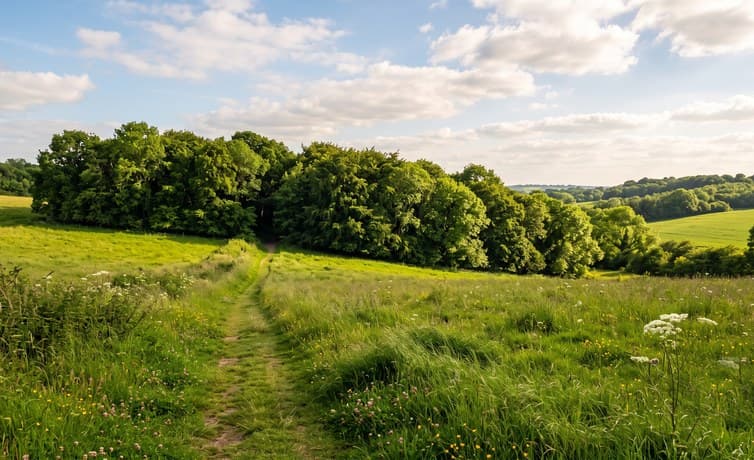
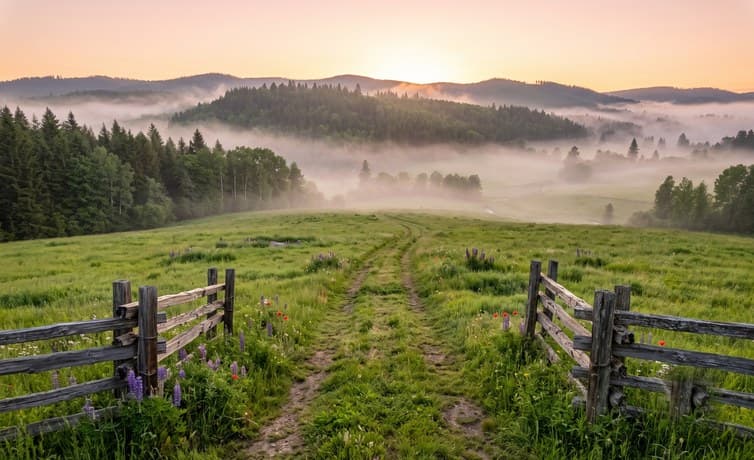
Photos and maps can tell you a lot about a piece of land, but nothing replaces walking it yourself. Summer is prime season for property visits — the roads are dry, the days are long, and you'll see the land in full leaf, exactly the way you'd use it for camping, hunting prep, or a future build.
The trick is knowing what to look for. Most first-time visitors wander the prettiest parts of a tract and drive home with a feeling instead of facts. This checklist turns your visit into a real evaluation.
Before You Leave Home
A little preparation doubles the value of a site visit.
- Pull the parcel map from the county assessor's site or the listing, and load the boundaries into a mapping app like onX or Land id so your phone shows your position relative to the lines.
- Check the FEMA flood map for the parcel.
- Review the listing for claimed features — creek, pond, trails, power at the road — and make a list to verify.
- Bring water, boots, bug spray, and a charged phone. Summer visits mean heat and ticks; dress for the field, not the car.
Verify Access on the Way In
The evaluation starts before you reach the property.
- Note the last stretch of road: county-maintained gravel, private drive, or two-track? Imagine it in a wet week or in January.
- Watch for gates and whether they're locked, and who controls them.
- Check cell signal along the route and on the tract itself.
- Confirm the entrance matches where the deeded access is supposed to be.
Walk the Boundaries, Not Just the Middle
With the parcel lines on your phone, walk as much of the perimeter as you reasonably can.
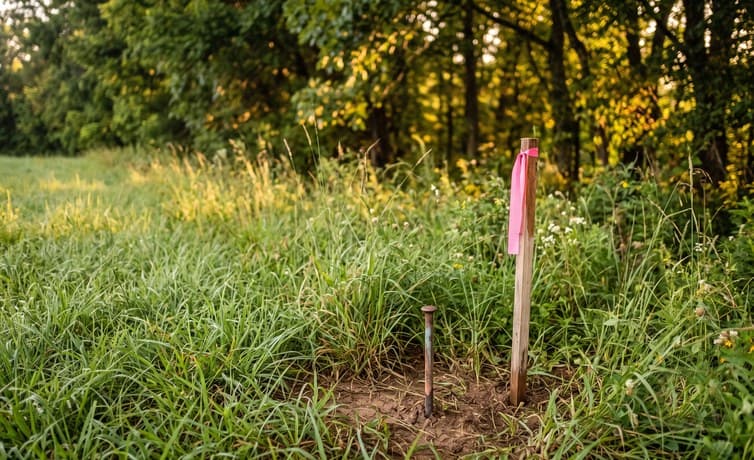
- Look for corner pins, survey markers, old fence lines, or painted trees.
- Note anything crossing the lines: neighbor's fences, driveways, deer stands, or grazing livestock can signal encroachments worth clarifying before closing.
- Pay attention to what borders the land — a well-kept farm, a public forest, or a salvage yard all change the picture.
Read the Water and the Ground
Summer shows you the land at its driest, so read the clues carefully.
- Find any advertised creek or pond and judge whether it's year-round or seasonal; dry gravel channels and water-stained rocks tell the story.
- Look for standing-water signs in low areas: cattails, cracked mud, moisture-loving trees like willows and sycamores.
- Note slopes and drainage paths. Where would rain go during a downpour, and is your favorite build spot in its way?
- Kick the soil in open areas — rocky, sandy, or heavy clay ground affects everything from driveways to septic systems.
Evaluate the Spots You'd Actually Use
- Build or camp site: look for level, well-drained ground with good sun and a safe distance from big dead trees.
- Views and privacy: summer foliage shows you the maximum screening you'll get; winter will be more open.
- Timber and habitat: healthy mixed woods, browse lines, tracks, and trails hint at hunting quality.
- Power: note the nearest utility pole and guess the distance — you'll confirm with the co-op later.
After the Walk
Sit in the truck and write down impressions while they're fresh: what matched the listing, what didn't, and what questions remain. Photograph anything unclear. Then follow up — call the county about permits, the utility about power, and the seller about anything that surprised you. A tract that survives both the walk and the follow-up questions is a tract worth buying.
Walk It, Love It, Own It with Classic Country Land
Classic Country Land has been helping people find their own piece of country for more than 25 years, and we encourage buyers to visit our properties and walk the land first. When you find the right tract, in-house owner financing makes it simple — no credit or background check, down payments as low as $999, across 20-plus states. Browse land at classiccountryland.com or call 972-649-6200 to plan your visit.
What you pay upfront: $999 down, plus a one-time $249 document fee at closing.
Financing disclosure: Basic-plan payments shown assume $999 down at 10.99% APR, amortized over terms up to 20 years — some contracts include a balloon payment, typically due after three years, when the remaining balance is refinanced or paid. Rates, discounts, and terms are subject to adjustment without notice.
Photos and maps can tell you a lot about a piece of land, but nothing replaces walking it yourself. Summer is prime season for property visits — the roads are dry, the days are long, and you'll see the land in full leaf, exactly the way you'd use it for camping, hunting prep, or a future build.
The trick is knowing what to look for. Most first-time visitors wander the prettiest parts of a tract and drive home with a feeling instead of facts. This checklist turns your visit into a real evaluation.
Before You Leave Home
A little preparation doubles the value of a site visit.
- Pull the parcel map from the county assessor's site or the listing, and load the boundaries into a mapping app like onX or Land id so your phone shows your position relative to the lines.
- Check the FEMA flood map for the parcel.
- Review the listing for claimed features — creek, pond, trails, power at the road — and make a list to verify.
- Bring water, boots, bug spray, and a charged phone. Summer visits mean heat and ticks; dress for the field, not the car.
Verify Access on the Way In
The evaluation starts before you reach the property.
- Note the last stretch of road: county-maintained gravel, private drive, or two-track? Imagine it in a wet week or in January.
- Watch for gates and whether they're locked, and who controls them.
- Check cell signal along the route and on the tract itself.
- Confirm the entrance matches where the deeded access is supposed to be.
Walk the Boundaries, Not Just the Middle
With the parcel lines on your phone, walk as much of the perimeter as you reasonably can.
- Look for corner pins, survey markers, old fence lines, or painted trees.
- Note anything crossing the lines: neighbor's fences, driveways, deer stands, or grazing livestock can signal encroachments worth clarifying before closing.
- Pay attention to what borders the land — a well-kept farm, a public forest, or a salvage yard all change the picture.
Read the Water and the Ground
Summer shows you the land at its driest, so read the clues carefully.
- Find any advertised creek or pond and judge whether it's year-round or seasonal; dry gravel channels and water-stained rocks tell the story.
- Look for standing-water signs in low areas: cattails, cracked mud, moisture-loving trees like willows and sycamores.
- Note slopes and drainage paths. Where would rain go during a downpour, and is your favorite build spot in its way?
- Kick the soil in open areas — rocky, sandy, or heavy clay ground affects everything from driveways to septic systems.
Evaluate the Spots You'd Actually Use
- Build or camp site: look for level, well-drained ground with good sun and a safe distance from big dead trees.
- Views and privacy: summer foliage shows you the maximum screening you'll get; winter will be more open.
- Timber and habitat: healthy mixed woods, browse lines, tracks, and trails hint at hunting quality.
- Power: note the nearest utility pole and guess the distance — you'll confirm with the co-op later.
After the Walk
Sit in the truck and write down impressions while they're fresh: what matched the listing, what didn't, and what questions remain. Photograph anything unclear. Then follow up — call the county about permits, the utility about power, and the seller about anything that surprised you. A tract that survives both the walk and the follow-up questions is a tract worth buying.
Walk It, Love It, Own It with Legacy Land
Legacy Land has been helping people find their own piece of country for more than 25 years, and we encourage buyers to visit our properties and walk the land first. When you find the right tract, in-house owner financing makes it simple — no credit or background check, down payments as low as $999, across 20-plus states. Browse land at classiccountryland.com or call 972-649-6200 to plan your visit.
What you pay upfront: $999 down, plus a one-time $249 document fee at closing.
Financing disclosure: Basic-plan payments shown assume $999 down at 10.99% APR, amortized over terms up to 20 years — some contracts include a balloon payment, typically due after three years, when the remaining balance is refinanced or paid. Rates, discounts, and terms are subject to adjustment without notice.